Get Full Government Meeting Transcripts, Videos, & Alerts Forever!
Get email alerts on the Staffing And Budget topic
No spam. Unsubscribe anytime.
Marlboro County board reviews draft staffing standards as members warn budget will force tradeoffs
Summary
At a special-call meeting, board members examined draft 2026–27 staffing standards that would drive most of the district budget, questioned class-size and counselor ratios, and discussed revenue pressures tied to fee‑in‑lieu changes and limited capital funds.
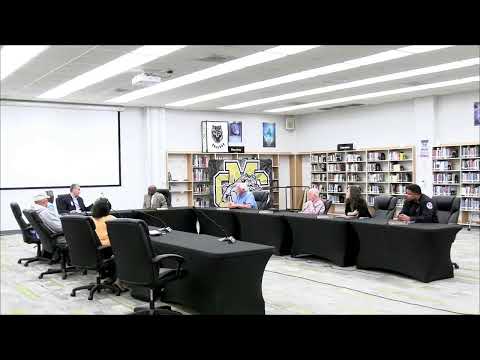
At a special-call meeting on March 16, the Marlboro County Board of Education reviewed two draft staffing‑standards documents that district staff said would determine the majority of school staffing and therefore drive roughly 60–70% of the budget.
A staff presenter told the board the documents would formalize how many teachers, assistant principals, counselors and support staff are assigned to each school and said final numbers will be set after conversations with principals and input from the incoming superintendent. "If adopted and put in place, they really could represent probably 60 to 70% of the budget on these two pieces of paper," the presenter said.
The board pressed on specific targets. The presenter described a staffing goal of about 25 students per teacher as a district target while acknowledging some classrooms could exceed it: "That doesn't mean that there's going to be no classroom in the district that has more than 25. It's just saying that's how we staff." Members repeatedly asked for concrete, school‑by‑school numbers before the board finalizes the standards.
Members also raised questions about guidance and career counseling. The presenter said state rules require a career counselor at middle schools and above and that career‑counselor roles (GCDF) can be added into guidance calculations. A board member said she expected guidance counselors at a 1:300 ratio and noted some schools currently have different coverage levels.
Security staffing and so‑called "behavior security assistance" were also discussed. The presenter said a mix of certified and non‑certified employees provide security at some schools and that the district needs to standardize allocations: "We have, um, a full‑time security person up here... But there's also one other individual who works security... that secures the student parking lot. So that's the reason you don't have any listed for the middle schools is because you're not seeing that need in the middle." Board members asked staff to clarify how many non‑teacher security positions are planned.
Budget constraints framed much of the discussion. Staff said projected increases in state funding would likely be directed to teacher salary increases, limiting flexibility for new hires. The presenter estimated a recurring annual payout liability tied to accumulated vacation could be on the order of $100,000–$120,000 and warned the district's general fund balance may fall below the 8.33% threshold this July.
Board members also discussed how county fee‑in‑lieu agreements (sometimes called "felo" or fee‑in‑lieu of tax) and county council allocations affect district revenue. A board member described a hypothetical reallocation that would change a historical 50/50 split to a 90/10 split, sharply reducing school revenue and effectively increasing the county's tax‑equivalent receipts.
The presenter said the district has about $2.5 million available for capital needs when accounting for bonds and sales tax revenue but cautioned that much of that is already committed to debt service. Members asked staff to return with school‑level staffing tables and with results of meetings the presenter said they had held with the county treasurer and finance director.
The board scheduled the next step: staff will prepare concrete staffing numbers for review at an April meeting and continue detailed budget work in executive session where personnel specifics are discussed.