Get Full Government Meeting Transcripts, Videos, & Alerts Forever!
Get email alerts on the Homeless Shelters topic
No spam. Unsubscribe anytime.
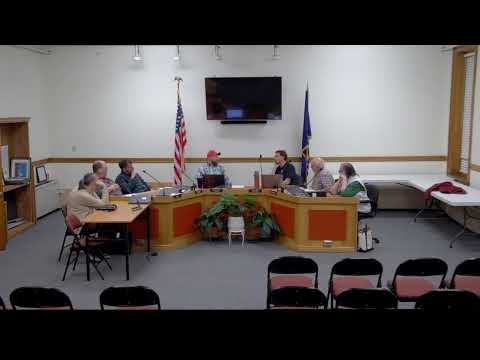
Planning board debates homeless-shelter licensing, forwards amended draft to select board
Summary
At a workshop the Scaggan Planning Board amended a draft ordinance on homeless shelters and public camping to tie enforcement to available shelter space and to rework staff-vetting language; the board voted to forward the amended draft to the select board for further consideration.
The Scaggan Planning Board spent the bulk of its April workshop reviewing a draft ordinance that combines rules for homeless shelters and a ban on public camping, amending the wording before forwarding the measure to the select board.
The board opened discussion after staff said the draft had been circulated through Brian and reviewed by counsel. A member noted recent case law from 2024 that, in practice, prevents municipalities from criminalizing sleeping in public where there are no adequate shelter alternatives; the board agreed enforcement language must be conditioned on whether shelter space is available.
Much of the meeting focused on operational requirements in the draft: licensing, maximum occupancy tied to building and life-safety codes, floor plans, evacuation and security procedures, sanitation, and pest-control plans. Members said many of these standards mirror existing building and fire codes (NFPA and state rules) but warned that additional licensing burdens could make siting shelters infeasible in town.
A particularly contentious section required owner–operators to submit staff and volunteer lists for review and allowed the Scaggan Police Department to conduct personnel reviews. Several board members said municipal-led vetting could create an open-ended workload and potential liability for the town and urged that the ordinance instead require shelters to obtain background checks at their own expense and provide signed verification to the town. The code enforcement officer said the intent was to ensure facilities maintained basic safeguards and contact information for emergency responders.
Jeff, citing a municipal example he reviewed, urged the board to consider a staff-certification and documentation approach rather than mandatory police-administered vetting: “I was impressed by requiring that level of certification,” he said, referencing training such as first aid and overdose response used elsewhere.
Members also debated a proposed 1,000-foot separation between licensed shelters and other sensitive uses (for example, schools). Some argued the distance could block viable sites and favored a variance/ case‑by‑case finding allowing the planning board to reduce separation when public‑health and safety concerns were resolved.
By the end of the discussion the board agreed to amend the draft to (1) make enforcement of any public-camping ban contingent on shelter capacity being available and (2) revise the staff-vetting language so facilities, not the town, bear the primary vetting and verification responsibilities while preserving the town’s ability to request information for public-safety reasons. The chair called for a voice/hand vote and the board approved forwarding the amended draft to the select board.
Next steps: the draft will go to the select board for review and any additional edits; the planning board’s amendments include suggested language on conditional enforcement, a variance/interpretation pathway for separation distances, and a certification-based approach to staff qualifications.