Get Full Government Meeting Transcripts, Videos, & Alerts Forever!
Get email alerts on the Land Use Conditional Plat topic
No spam. Unsubscribe anytime.
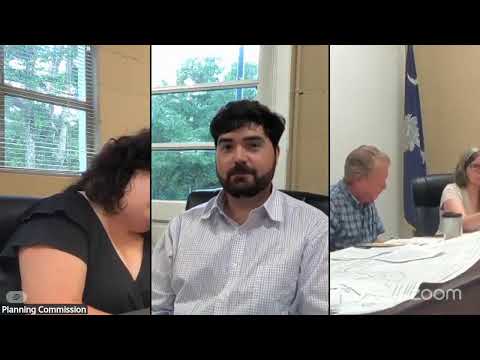
Planning commissioners deny conditional plat for Preserve at C Sound, reject proposed bond
Summary
The Awendaw Planning Commission denied a developer's request for conditional plat approval for the Preserve at C Sound (phases 1 and 2) and rejected the proposed surety bond, citing missing wetland setback illustrations, incomplete infrastructure and an inadequate completion timeline.
Awendaw ' The Awendaw Planning Commission voted to deny a conditional plat application for the Preserve at C Sound subdivision and to reject the developer's proposed surety bond after staff and several commissioners raised concerns about incomplete infrastructure and missing required setbacks.
A commissioner moved to deny the conditional plat and to "reject acceptance of the proposed surety bond," saying the application did not satisfy conditions tied to public health, safety and welfare. The motion cited three central concerns: the plat did not illustrate the required 35-foot wetland setback, required infrastructure had not been completed or accepted, and the proposed bond lacked a clear, enforceable deadline for completion. The motion was seconded and the commission proceeded to the next agenda item.
Staff's presentation noted that the planning commission had previously found the application incomplete and that the updated submission still omitted key items. Staff reported that the town engineer had earlier confirmed the construction-cost estimate used to calculate the bond, and summarized remaining issues: the bond language did not include a specific timeline for finishing required improvements (staff recommended a limit not to exceed two years), landscaping and irrigation estimates were missing, and the plat did not clearly show the 35-foot wetland buffer required by condition 20 of the preliminary plat approval.
The applicant's representatives argued conditional plat approval would allow the developer to obtain county parcel identifiers and addresses (TMS numbers), pull building permits for phase one and accelerate construction and sales, which the applicant said would bring tax and fee revenues sooner to the town. The applicant said the company had already invested multiple millions in the project, that many phase-one infrastructure items (roads, curbs, ponds, water mains and some utilities) were in place, and that remaining construction work could be completed within months if permits progressed.
Commissioners pressed the applicant on specifics: staff confirmed that the town does not impose a broad impact fee and that the town's fees for new connections were described in the record as a tap/meter fee totaling about $6,000 per unit; the applicant said roughly $4.7 million had been spent to date with approximately $1.2 million remaining to finish construction. Commissioners also raised fire access and stormwater-review questions and repeatedly emphasized the town's limited capacity to enforce a bond claim quickly. Several commissioners said the town should not allow lots or houses to be approved in a way that leaves new homeowners without completed, accepted public infrastructure.
The denial leaves the applicant with options to revise the plat and bond language and return for future consideration. At the hearing staff recommended that any bond include a clear completion deadline, explicit coverage for required improvements (including landscaping and irrigation), and that release of bond funds be subject to town council approval rather than the town engineer alone.
What comes next: The developer may provide revised plat drawings that illustrate required setbacks, supplement missing exhibits and propose a bond and schedule acceptable to the commission and town council. The commission did not set a date for reconsideration during the meeting.