Get Full Government Meeting Transcripts, Videos, & Alerts Forever!
Get email alerts on the Budget topic
No spam. Unsubscribe anytime.
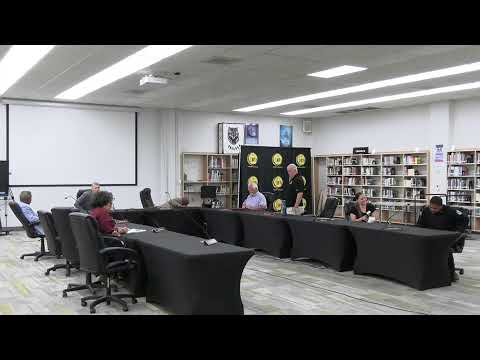
School board hears plan to cut positions as enrollment, state funding fall; millage increase flagged as possible option
Summary
Board members were shown $2.5 million in proposed reductions to address a structural shortfall driven by post‑COVID staffing levels and a roughly 32% drop in students over 20 years; presenters said the district may need to consider a millage increase if county revenues and fee‑in‑lieu support decline further.
A presenter to the Marlboro County School Board outlined a set of staffing and spending reductions intended to close roughly $2.5 million of projected shortfalls, saying the district must balance its budget while protecting classroom instruction.
Board members were told the district previously routed some positions to COVID-era federal funds; when that money ended, those positions flowed back into the general fund and contributed to the current squeeze. The presenter highlighted a roughly 32% decline in enrollment over two decades (135-day ADMs from the State Department), noting that state funding—about 70%–75% of district spending—is tied to student counts and thus falls as enrollment drops.
To avoid cutting classroom teachers, the district proposed trimming support and administrative positions (social workers, parenting coordinators, clerical roles and some administrative posts) and targeting cuts of $100,000 or more in the largest line items. The board was told the list shown in the packet was not exhaustive, but focused on the largest reductions.
The presentation included a primer on millage: the school operations millage was presented as 85.3 mills (which, after state changes such as Act 38, does not apply to owner‑occupied homes), while the debt service millage is 33 mills and does apply to homeowners. Examples in the board packet showed that one mill would be roughly $1.80 per year on a $30,000 vehicle for the school portion; debt service mills would raise a homeowner’s bill (for example, five mills would add about $50 per year for owner‑occupied property in the packet scenario).
Board members discussed the tension between raising revenue and the county’s own fiscal choices. Presenters noted the district’s county revenue has decreased and that fee‑in‑lieu transfers from the county are uncertain; one board member observed that a previous county vote shifted about $1.5 million away from the school district and into county coffers. Several members urged renewed intergovernmental conversation—between the superintendent, county and city administrators—before any decisions on millage.
Officials also emphasized that staffing reductions will likely require remaining employees to take on additional responsibilities, and the district plans to seek efficiencies such as software or administrative consolidation where feasible. The presenter said some neighboring districts operate with fewer staff and comparable responsibilities, noting those examples as models for possible efficiencies.
The board received the presentation and discussion closed with a commitment to continue planning; no formal action on millage was taken at the meeting.