Get Full Government Meeting Transcripts, Videos, & Alerts Forever!
Get email alerts on the Tattoo Parlors topic
No spam. Unsubscribe anytime.
Planning commission to seek public hearing on moving tattoo parlors into C1 commercial zone
Summary
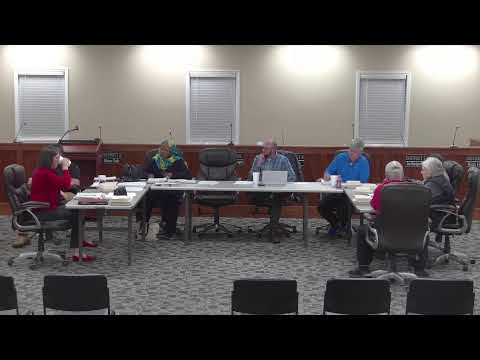
At a Feb. 16 work session the Batesburg‑Leesville Planning Commission discussed amending the zoning ordinance to allow tattoo and piercing businesses as permitted uses in the town's C1 general commercial district, agreed to draft language, and scheduled the item for a public hearing at next month's meeting.
The Batesburg‑Leesville Planning Commission agreed at a Feb. 16 work session to prepare draft ordinance language that would permit tattoo and body‑piercing businesses as principal uses in the town's C1 general commercial zoning district and to place the proposal on next month's agenda for a public hearing.
Commission members said they supported moving tattoo parlors out of industrial zones into commercial districts but emphasized the need for local restrictions. Commission discussion focused on spacing limits between similar businesses, hours of operation, and whether to group tattoo and piercing services under a single regulatory category. "We want to follow those restrictions," a commissioner said, noting the board could adapt language used by other municipalities rather than copy it verbatim.
Members debated operating hours, with suggestions ranging from a 10 p.m. or 11 p.m. closing time to midnight; one participant recited existing ordinance language for other uses: "The hours of operation shall be no later than 11:00 p.m. when such establishment is located within 600 ft of a residential zone," prompting discussion of whether a similar 600‑foot residential buffer should apply. The commission discussed how to measure that distance (closest wall, lot line or right‑of‑way) and asked staff to clarify measurement language.
The commission also discussed related neighborhood concerns, including co‑location with vape shops and other uses that historically have been sited in industrial zones. A member said tattoo and piercing businesses are usually limited to those services, which can simplify regulation: "It has to be strictly tattoos and body piercings," the member said.
Staff (Jay and Becky) were asked to draft ordinance verbiage for the planning commission to review. The board agreed to include the tattoo‑parlor amendment on the next meeting agenda and to hold a public hearing locally before forwarding any recommendation to town council. No formal vote was taken during the work session; members described the action as preparation for a future public hearing and vote.
What happens next: Staff will draft ordinance language and clarify measurement and buffer language. The commission will advertise and hold a public hearing on the amendment at the next planning commission meeting; any planning commission recommendation would then be forwarded to town council for consideration.