Get Full Government Meeting Transcripts, Videos, & Alerts Forever!
Get email alerts on the Trees topic
No spam. Unsubscribe anytime.
Allendale council divides over complex tree-preservation overhaul, weighs exemptions and enforcement
Summary
Council reviewed Ordinance 2026-04 to revise tree-protection rules, debating stricter retention (160 caliper inches per acre), new mitigation formulas and a possible town tree fund. Members split over exemptions for single‑family lots and enforcement capacity; staff will return with refined language.
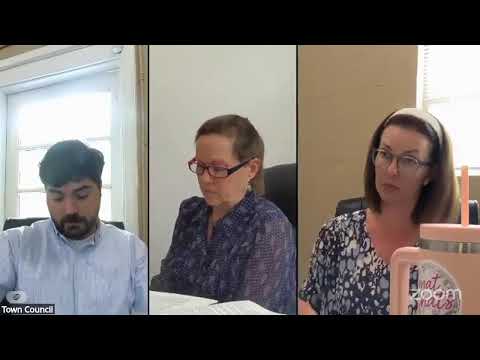
Town Council of Allendale spent much of a workshop session debating Ordinance 2026‑04, a staff‑driven rewrite of the town's tree‑preservation rules that would expand protections for significant and grand trees, add mitigation formulas and create a possible town tree fund.
Dan, the planning manager, opened the discussion with the staff overview, saying the first‑reading version expands significant‑tree protection, requires site plans marking protected trees and proposes a retention standard based on “160 caliper inches” per acre. He summarized the Planning Commission's recommendation to classify hardwoods 18 inches DBH and above as grand trees with a protection radius of half a foot per inch of DBH and noted that encroachments of up to 33% could be approved administratively while larger encroachments or removals would need Board of Zoning Appeals review.
The debate quickly turned to enforcement and whether the rules were appropriately scaled to Allendale’s stated rural character. A council member argued that the draft was “way too complex” for a rural town and urged simpler standards and larger lot sizes to discourage dense, fill‑and‑build development. Other members pushed back, saying more sophisticated, species‑sensitive metrics (for example, protecting live oaks beyond a simple radius) are needed to keep large trees viable. Staff pointed to practical tradeoffs: measuring drip lines and enforcing bespoke protections requires arboricultural expertise or contracted services many small towns lack.
Council members also disagreed on whether to exempt existing single‑family lots or minor subdivisions from retention requirements. The Planning Commission had proposed exempting those lots from some retention rules to avoid hardship for small property owners; several council members warned such exemptions could be exploited by developers buying and subdividing parcels to work around moratoria.
On mitigation, staff described the draft table in which removing five or fewer significant trees would generally require one‑for‑one replacement with trees of at least 2.5 caliper inches, while larger removals or grand‑tree losses would trigger percentage replacement tied to DBH. Staff also proposed a tree fund, modeled on other towns' practice, to pay for public replanting or to replace trees when private property owners cannot meet mitigation requirements.
Council did not vote on the ordinance. Instead members directed staff to refine the language — clarifying exemptions, enforcement mechanisms (including stop‑work orders and permit suspensions), and the role of arborist certification — and to return with a revised draft. Several members requested closer alignment with the town’s comprehensive plan and a straightforward enforcement approach that would not unduly burden ordinary homeowners.
The council took a short break and resumed other agenda items after the tree discussion but left the ordinance open for additional edits and future workshop review.