Get Full Government Meeting Transcripts, Videos, & Alerts Forever!
Get email alerts on the Mobile Home Policy topic
No spam. Unsubscribe anytime.
Mobile-home park owner Chris Wils asks commission to allow replacements newer than existing units
Summary
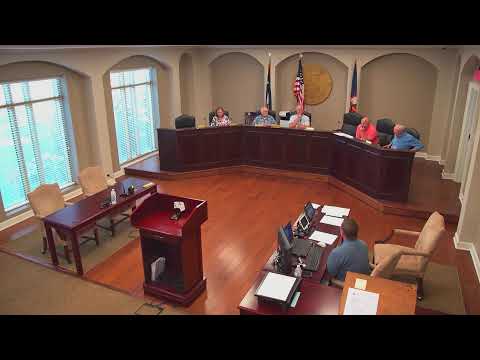
At a July 14 Planning Commission public hearing, mobile-home-park owner Chris Wils proposed an exemption to allow replacing an on-site mobile home with one newer than the removed unit (rather than strictly requiring models 5 years or newer). Commissioners debated enforcement, safety standards and whether to change the age threshold; an amendment to move to 20 years failed 3–2.
Chris Wils, who identified himself as the owner of two mobile-home parks inside the city, told the Clinton Planning Commission on July 14 that he was asking for an exemption to the city’s replacement rule so landlords could replace existing units with ones newer than those removed rather than be limited to a strict "5 years or newer" standard.
"I own two of the mobile home parks here located in Clinton," Wils said in his presentation. He said many existing units date to the 1960s and 1970s, that a strict five-year rule makes replacement prohibitively expensive, and that his proposal included minimum site and construction standards — skirting, porches, vapor barrier, and anchoring systems — to ensure replacements are safer and more presentable.
Phil, the planning director, explained the city’s current code interpretation: units inside the city are treated as legal nonconforming uses and, under existing local policy, a replacement typically must meet a newer-than threshold (the commission had been enforcing a five-year-or-newer rule). He also noted the state distinction around June 1976 construction dates for mobile versus manufactured homes.
Commissioners asked how "newer" would be defined and discussed practical options. Wils said he would favor a flexible standard that simply required the replacement home to be newer than the unit removed; other commissioners proposed a fixed numeric threshold (for example, 20 years) as a clearer, enforceable rule. Supporters argued that replacing 1960–1970 units with 1998–2010 models would improve neighborhood appearance and safety and increase tax revenue; opponents warned a looser rule could create loopholes that weaken minimum standards.
A motion to amend the local replacement standard and recommend a 20-year threshold to the city council was moved and seconded but failed on a hand vote (motion failed 3–2). Following the vote the commission closed the public-hearing portion of the meeting; the commission did not adopt a change to the ordinance at that meeting and left any final amendment to the city council process.
The commission’s discussion emphasized process limits: several members said any change to the code would need to be drafted, reviewed by staff, and forwarded to council; some commissioners signaled they were open to exploring alternatives but were not ready to reduce the ordinance’s current restrictiveness on its face.
The commission also noted procedural safeguards: if replacements are allowed, they would remain subject to city inspection and permitting (including electrical and structural checks) before occupancy.
The next procedural step for any ordinance change would be a staff-drafted amendment presented to the commission and, if recommended, to the City Council for final consideration.