Get Full Government Meeting Transcripts, Videos, & Alerts Forever!
Get email alerts on the Public Safety topic
No spam. Unsubscribe anytime.
Clemson police report staffing gaps, Narcan replenishment plan and forensic 'green screen' testing
Summary
Clemson Police reported one officer vacancy and ongoing recruitment, announced an application for state opioid‑recovery funds to replenish Narcan ‘one‑boxes’ and expand distribution, and described a ‘green screen’ forensic testing protocol that can confirm suspected drink‑spiking but so far has not produced local positive results.
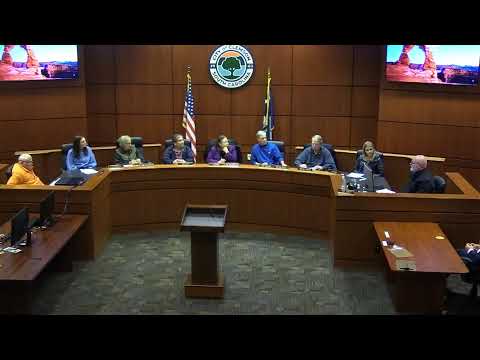
Chief Rutder delivered the Clemson Police Department’s status and public‑safety update to the advisory board on Jan. 22, reporting staffing, equipment, outreach and crime‑statistics data and outlining a plan to use opioid‑recovery grant funds to replenish and expand Narcan distribution.
Staffing and equipment: The chief said the department currently has one officer vacancy, two officers in the police academy, one graduate in field training and a dispatcher in final background checks. “The new cars are in,” he said; the department also received new duty firearms with optics and has begun range training and issuing the equipment.
Opioid recovery funding and Narcan boxes: The chief described applying to the state opioid recovery fund (SCORF) in partnership with Favor Upstate to replenish campus and downtown ‘one‑box’ Narcan kits and to expand placement to city buses. The proposed grant would also fund training and an outreach coordinator to partner with the university fire department on medical calls and to help connect people to recovery services if identified. The chief said the city expects to learn grant outcomes in several months.
Crime statistics and narcotics enforcement: For November the chief reported one attempted murder (a road‑rage shooting with no injuries), two reported forcible rapes, one aggravated assault, 11 simple assaults, eight motor vehicle thefts and approximately 15 DUIs. December figures included one forcible rape, one aggravated assault, three burglaries, nine narcotics violations and 10 DUIs. From Jan. 1–22 the department logged one fondling report, 10 simple assaults, three vehicle break‑ins, three motor vehicle thefts, 25 MIPs and 16 disorderly conducts. The chief said narcotics investigators executed two search warrants and arrested three alleged drug dealers; two cases are federal, one remains in state court.
'Green screen' forensic testing for suspected drink‑spiking: The chief explained a forensic protocol, developed with the state lab (SLED) and a nonprofit partner, that uses voluntary blood or urine samples to detect minute amounts of foreign substances not typically screened in hospital treatment tests. “We have not been able to prove that anybody's drink has been spiked,” the chief said, adding that the green‑screen test gives investigators a way to determine whether a suspected spiking occurred and to preserve chain‑of‑custody evidence for prosecution if a suspect is identified.
Public tools and transparency: The chief also addressed two operational items: an ongoing vendor integration issue that has kept the public crime map offline while vendors develop a secure API, and an accreditation assessment scheduled for the second week of February.
What’s next: The police department will continue recruitment and training, await notification on the SCORF grant, work on re‑establishing the public crime map, and sustain community outreach activities such as Shop with a Cop and Angel Tree donations. The advisory board discussed warming‑station logistics for an anticipated winter storm and clothing donation channels for use in the jail and by officers responding to people in need.