Get Full Government Meeting Transcripts, Videos, & Alerts Forever!
Get email alerts on the Zoning Overlay topic
No spam. Unsubscribe anytime.
City staff unveil draft ‘NC1’ neighborhood conservation overlay to limit development pressure in two downtown neighborhoods
Summary
Staff presented a draft 'NC1' overlay aimed at preserving the character of Cold Water Springs and Sloan‑Poe neighborhoods by adding architectural review, construction site standards, tree conservation requirements and limits on some subdivision practices; commissioners and residents voiced concerns about cost, enforceability and effects on affordability.
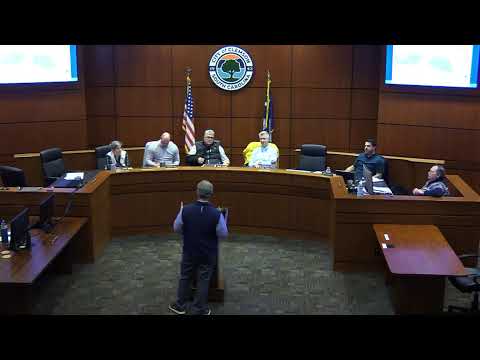
City staff presented an early draft of a Neighborhood Conservation Overlay (NC1) for two downtown Clemson neighborhoods during the Dec. 8 Planning Commission meeting, framing it as a tool to address development pressure adjacent to College Avenue and Highway 93.
Assistant City Manager Nathan Woods introduced the concept: “We’re calling this the neighborhood conservation overlay, NC1,” and said the primary purpose is to "maintain the setting of the area, minimizing changes to the neighborhood and its remaining architectural conventions." He said staff is treating the current document as a “draft of a draft” and expects substantial public discussion.
The draft lists multiple regulatory approaches staff proposed to achieve that purpose: all new homes and major exterior additions in the overlay would require approval from a board of architectural review; larger projects would be subject to a city site management plan during construction; detached garages and accessory structures would need materials consistent with the primary structure; minimum lot frontage rules and other subdivision standards would limit certain infill configurations; and the draft would limit one accessory dwelling unit (ADU) per lot. Staff also proposed tree‑mapping and measures to minimize grading to preserve mature trees.
Woods said the overlay is targeted at two named neighborhoods—Cold Water Springs and Sloan‑Poe—because their proximity to mixed‑use commercial corridors has placed them under greater development pressure. He also flagged a companion policy staff is exploring: a "buy‑ride" option that would allow developers limited additional height in exchange for contributions to an affordable‑housing fund.
Several commissioners and attendees voiced reservations. Concerns fell into three main categories: increased cost and delay from architectural review and additional permitting; the overlay acting like a "city HOA" for homeowners; and possible adverse effects on affordability if more restrictive rules raise construction costs. Several speakers emphasized that overlay language must be precise to avoid workarounds and unintentional consequences.
Staff response and timeline: Woods and Jacob Peabody said the draft is preliminary and staff will refine text and maps, seek neighborhood feedback and return with a revised proposal (staff indicated a goal of presenting a more developed draft in the first quarter). No ordinance was proposed or adopted at the meeting.