Get Full Government Meeting Transcripts, Videos, & Alerts Forever!
Get email alerts on the Surveillance Flock topic
No spam. Unsubscribe anytime.
Residents urge Troy council to end Flock surveillance contracts, demand transparency
Summary
Multiple residents urged the Troy City Council to terminate or disable Flock Safety automated license-plate reader cameras, citing privacy, cybersecurity, and transparency concerns and asking for public review of contracts and data‑sharing practices.
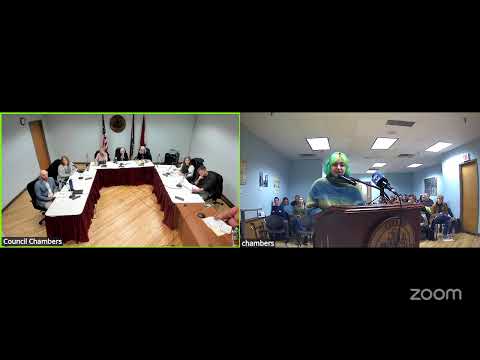
During the March public forum, dozens of Troy residents urged the council to end or at least pause the city’s use of Flock Safety automated license‑plate reader (ALPR) cameras and to require democratic approval for future mass‑surveillance contracts.
Deirdra Shay of Central Troy told the council she and her partner noticed a Flock ALPR near their home and described the system as ‘‘a platform’’ that captures license plates, vehicle attributes and uploads data to a cloud database. She said she was concerned about the system’s privacy implications and possible access by federal agencies and asked whether the community had been consulted and how much tax money the city has spent on the cameras.
‘‘Flock surveillance technology in particular appears to be very hackable and can be easily manipulated by bad actors,’’ Shay said, and she asked the council for the contract length, cost, and any records showing how the cameras have helped solve crime.
Other residents echoed procurement and transparency concerns. Angela Wheeler said the cameras appear to have been installed in 2023 and that FOIL responses produced only a barely legible procurement form for an April 2025 renewal signed by Chief DeWolfe, arguing that no full contract has been produced to the public. Zachary Resconi urged three concrete steps: remove or disable the existing cameras, exercise the termination clause in Troy Police Department’s agreement with Flock, and draft an ordinance requiring council approval before future surveillance contracts.
Speakers also cited national examples and audits in which municipalities later canceled or restricted Flock deployments, and some commenters alleged instances of Flock data being used by federal authorities in high‑profile cases. Several speakers raised cybersecurity worries including weak two‑factor authentication and reported vulnerabilities in the platform.
Councilmembers and staff did not announce a formal response or vote during the meeting. Some attendees said they had been told informally that Troy Police Department finds the cameras valuable for solving crime; residents said they wanted that assessment to be backed by documents and public oversight.
Next steps requested by speakers included producing the full contract(s) and procurement records, providing data about investigative value and costs, disabling or removing cameras while review is completed, and drafting local rules that require council approval and community oversight before future mass‑surveillance purchases.