Get Full Government Meeting Transcripts, Videos, & Alerts Forever!
Get email alerts on the Housing Good Cause topic
No spam. Unsubscribe anytime.
Troy council adopts local good-cause eviction law after months of public debate
Summary
The Troy City Council unanimously passed Local Law No. 1 to adopt Article 6A of the real property law, establishing local good-cause eviction protections. Supporters said the law balances tenant stability and landlord rights; opponents urged study of economic impacts.
Council President Sue Steele opened the March meeting with an annual address that reiterated the council’s priorities, then presided over a vote that adopted Local Law No. 1 to apply Article 6A of the real property law in Troy.
The measure, sponsored by council members including Bean, McLaren, Campbell-Cohen and Council President Steele, passed with seven ayes and zero noes. Council members said the law protects tenants from arbitrary or retaliatory evictions while preserving landlords’ ability to evict for nonpayment, lease violations or property damage.
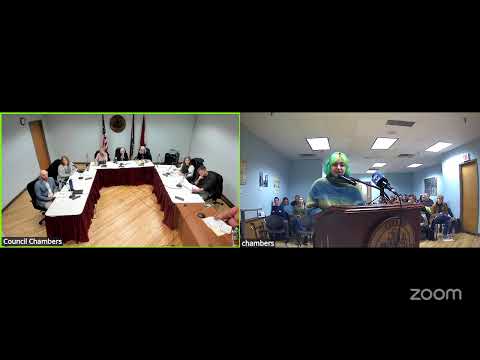
Supporters framed the law as a balance between stability for renters and fairness for responsible landlords. In public comment, tenant advocates and long-term renters said good-cause protections would let residents report unsafe or unhealthy housing conditions without fear of retaliation. “If the mayor had actually done her research, she would have learned all about the long-term success of New Jersey’s equivalent of good cause,” said Frankie, a long-term renter who urged passage.
Council members reiterated carve-outs designed to limit effects on new construction and to allow landlords to exceed rent caps in narrowly defined circumstances, such as documented increases in taxes, insurance, or necessary capital improvements. Council member Campbell-Cohen noted the law excludes newly constructed units under a 30‑year rule and emphasized exceptions intended to avoid discouraging development.
Opponents during the public forum, including landlords, warned of unintended consequences. Tony, a landlord from District 4, argued the policy could raise costs for some tenants and deter future investment, citing personal experience with difficult tenant removals.
Council members said they had taken resident input into account and that the measure had moved through committee review. The council recorded the final tally as seven ayes, zero noes. The law takes effect according to the procedures for local law implementation and application of Article 6A in municipal code; the council did not announce a separate effective date at the meeting.
Next steps: council members indicated they will continue work on related housing initiatives mentioned in President Steele’s address, including a landlord registry, stronger code enforcement, and programs for rental unit certification.