Get Full Government Meeting Transcripts, Videos, & Alerts Forever!
Get email alerts on the Invasive Plants topic
No spam. Unsubscribe anytime.
Associate professor urges sustained grazing, targeted herbicides and native plantings to control invasive species
Summary
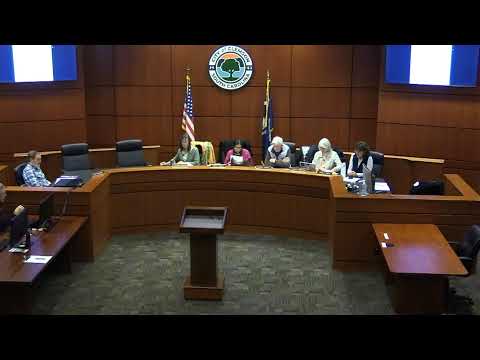
At a Clemson Sustainability Advisory Committee meeting, an associate professor of forest health recommended repeated grazing (goats), targeted herbicide applications (glyphosate, triclopyr) and outreach to promote native alternatives to curb invasive shrubs and trees, and cautioned that eradication requires persistent effort.
David, an associate professor of forest health and invasive species, told the sustainability committee that managing dense invasive vegetation often requires a combination of tactics rather than a single fix. “Goats come in and they will completely mow it down so you can at least see what you're dealing with,” he said, recommending repeated grazing followed by spot herbicide treatment when necessary.
David listed common problem plants in the region — Elaeagnus (Russian olive), nandina (heavenly bamboo), privet and Bradford pear — and said many were introduced for landscape or wildlife value before their invasive character was understood. “If you leave any rhizomes or sprouts or seeds, it's just going to come back,” he warned, urging landowners to expect multiple passes and steady effort to reclaim invaded sites.
On chemical controls, David named glyphosate and triclopyr as two commonly used active ingredients and emphasized following label directions. “Glyphosate is ... commonly known as Roundup. The trade name is just like Crest versus Colgate,” he said, adding that triclopyr “works best on woody things, vines, shrubs, trees.” He stressed that some treatments require certified applicators and that the product label is the legal instruction for use.
Committee members and attendees asked practical questions about small yards, children’s safety, and poison ivy. David said decisions should be context‑specific: remove hazard plants like poison ivy near play areas, but where the plant poses little risk he advised leaving it for its ecological role. He also described efforts to discourage planting of high‑risk cultivars, including a local “Bradford pear bounty” and free native‑tree giveaways.
Resources highlighted at the meeting included Forest Service identification and management PDFs and botanical‑garden classes; David offered to share the PDFs with attendees. He encouraged homeowners to seek native alternatives that meet aesthetic goals (spring color, fall foliage) and noted nurseries can provide native options by request.
The presentation closed with a reminder that eradication is difficult: “I'm not saying you can never get rid of invasive plants, but it takes work, takes effort, takes a little bit of time,” David said. The committee then moved on to its regular agenda.