Get Full Government Meeting Transcripts, Videos, & Alerts Forever!
Get email alerts on the Community Programs topic
No spam. Unsubscribe anytime.
Bright Side Family used surveys and local outreach to reshape Teaneck program
Summary
Bright Side Family described how the Community Begins at Home initiative used focus groups, partner dissemination and a shorter 13‑question survey to increase participation, inform program pivots and host resource fairs that connected 60 residents with services.
Bright Side Family presenters described how survey design, partner networks and in‑person outreach reshaped the Community Begins at Home initiative in Teaneck.
EJ Vizzi, director of senior programs at Bright Side Family, said the initiative targets two overlapping groups: people who have lived with a disability throughout life and people who develop a disability as they age. To ensure the team heard those voices, staff used focus groups, interviews and pilot questions from past age‑friendly surveys when drafting their instrument.
Early fielding of the initial 20+ question survey revealed low uptake on items using the word “assistance” and richer detail in open‑ended responses. “In the first maybe dozen or so responses we got, we realized people weren’t responding to the assistance and help question in the multiple choice,” Vizzi said, describing how respondents instead wrote clarifying details in margins and open text fields. The team reduced the instrument to 13 core questions to lower respondent burden and later used the removed items as optional follow‑up prompts.
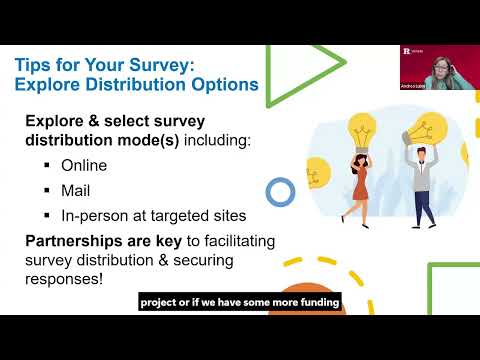
To reach residents, Bright Side enlisted the local Aging and Disability Resource Center (ADRC), Meals on Wheels volunteers, the township volunteer ambulance corps and fire department, and the township manager and council. Vizzi said volunteers handed printed surveys with self‑addressed envelopes and staffed a table at a “connections fair” where volunteers helped people fill out surveys in person.
Alexandra Valdivia, community programs manager, said three main lessons emerged: semantics matter (word choice changes response patterns), different subpopulations require tailored language, and storytelling and real‑life anecdotes improve resonance. Valdivia also reported a communication gap between the Bergen County Division of Disability Services and the Division of Senior Services that created referral silos the initiative has worked to bridge.
Bright Side described recent outreach results: a resource and connections fair at St. Anastasia’s in Teaneck drew about 60 participants and 16 vendor tables, and a networking breakfast brought roughly 30 organizations together to clarify referral pathways.
In the webinar Q&A, presenters said findings are shared with the town council, township department heads and posted on the organization’s website. Vizzi urged survey teams to include a question identifying caregiver assistance on the instrument and to allow respondents to select multiple roles when relevant to avoid misclassifying respondents.