Get Full Government Meeting Transcripts, Videos, & Alerts Forever!
Get email alerts on the Housing topic
No spam. Unsubscribe anytime.
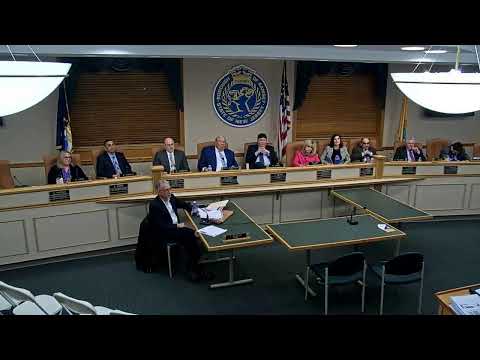
Ramsey planning board hears expert on amended housing element, residents press traffic and notice concerns
Summary
Planner Bruce Burgess told the Ramsey Planning Board the borough's 2026 amended housing element would meet a 26-unit realistic development potential while proposing Island Road and North Franklin Turnpike overlay zones; residents pressed procedural, traffic-safety and neighborhood-character concerns and urged alternative measures such as ADUs and stronger anti-solicitation protections.
Bruce Burgess, a licensed planner testifying as the borough's expert, told the Ramsey Planning Board at a March 3 public hearing that the borough's amended 2026 housing element and fair‑share plan reduces a preliminary state obligation and establishes a realistic development potential of 26 units that the borough can address through a combination of existing projects, bonus credits and overlay zoning. "If they do not vote on this plan and adopt the plan by March 15th, you could lose your immunity," Burgess warned, adding that a lost deadline would invite builder's‑remedy lawsuits.
The presentation traced New Jersey's Mount Laurel and fair‑share history, explained site‑selection priorities (proximity to mass transit and highway access), and described the borough's negotiated settlement with objectors. Under the plan, Ramsey proposes an Island Road R5E overlay (designed to allow up to about 19 units per acre on assembled sites of at least 2.5 acres), a lower‑density North Franklin Turnpike overlay, credits from several identified developments (including units at 425 Island Road and a special‑needs rental project), and a borough‑wide mandatory 20% set‑aside for any multifamily proposal of five or more units.
Residents at the hearing repeatedly pushed back on process and local impacts. Joe Carrie, a resident who raised procedural objections, said the amended plan and related mediation materials (213 pages) were not available for public review until less than six days before the hearing and asked the board to address public‑notice and document‑access concerns. Several speakers read passages from the borough's 2021 land‑use plan noting that the borough's policy aims to "protect and reinforce" established single‑family neighborhoods and questioned how a high‑density overlay on Island Road would reconcile with that language.
Traffic and pedestrian safety were central community concerns. Multiple residents cited an older traffic‑calming report and local crash experience on Island Road and asked whether capacity, crossing, and school‑route safety would be evaluated before any redevelopment occurs. Burgess and staff said detailed traffic and site‑plan studies typically occur during subsequent site‑plan review and that the master‑plan land‑use element would be revisited after the statutory deadline if needed.
Speakers also urged the board to examine alternative compliance tools such as accessory dwelling units (ADUs), gentle‑density strategies, and redevelopment of municipal parking lots near the Main Street train station. Burgess said ADU programs have had limited uptake in New Jersey (he cited roughly eight municipalities with programs) and that, while ADUs could be part of a longer‑term strategy, they were unlikely on their own to satisfy the borough's immediate litigation‑driven obligations.
Other recurring requests from residents included publicizing and strengthening Ramsey's existing "no‑knock"/anti‑solicitation protections, creating a rental‑registration system and LLC‑owner disclosure to discourage predatory investor solicitation around large overlays, and prioritizing downtown or municipal parcels that might better absorb higher densities near transit.
Burgess emphasized the constrained timeline set by state law and the court‑managed mediation process: "The state legislature selected March 15th as the drop‑dead date," he said, and urged the board to complete its vote to preserve municipal immunity from builder remedies. The board did not take a final vote on the amended plan during the portion of the meeting in this transcript; Burgess noted that fairness hearings and further court review remain part of the ongoing process.
The board scheduled question‑and‑answer time with Burgess and then opened the floor for public comments; residents were sworn before speaking. Next procedural steps described by the board and counsel include the planning board's vote on the master‑plan amendment, separate consistency reviews of three related ordinances, and subsequent governing‑body actions and filings with the court or program judge.