Get Full Government Meeting Transcripts, Videos, & Alerts Forever!
Get email alerts on the Environment topic
No spam. Unsubscribe anytime.
Officials consider regional litter‑prevention initiative emphasizing education, enforcement and coordinated branding
Summary
Dan Wood proposed a regional litter‑prevention initiative for Beaufort and Jasper counties centered on four pillars (education, awareness, enforcement/policy, infrastructure & data). Officials supported forming a working group but raised funding and enforcement capacity concerns.
Dan Wood presented a conceptual regional litter‑prevention initiative and asked whether the meeting would be willing to consider forming a joint group to refine an education‑first strategy across Beaufort and Jasper counties.
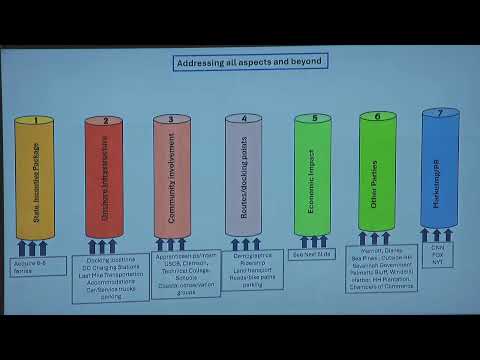
Wood said rapid growth and unsecured loads have increased litter despite past efforts and noted that existing efforts are fragmented across volunteers, nonprofits, public works and code enforcement. He proposed four pillars: education, public awareness, enforcement and policy, and infrastructure improvements plus data and accountability. He urged county‑level branding and a common curriculum for schools, student ambassadors and a shared communications calendar across municipalities.
Wood named Keep Beaufort County Beautiful and Keep Jasper County Beautiful as the principal local organizations involved in cleanup and suggested that combining counties and municipalities would strengthen grant applications. He proposed a joint committee to study coordination, curriculum and funding options but did not present a budget, saying municipalities are completing budgets now.
Committee members and attendees broadly supported further study but raised specific concerns: enforcement capacity (including the role of commercial haulers), funding sources (suggestions included A‑tax contributions tied to tourism), and practical shore‑side infrastructure for larger cleanups. Several speakers recommended pilot programs in Homeowner Associations or schools as an initial step and suggested aligning any education window with planned municipal plastics ordinances (an eight‑month education period was discussed).
Participants agreed to explore the idea further: several offered to convene mayors and existing nonprofit groups to form a study group or committee to refine objectives and identify funding and enforcement pathways. The meeting did not adopt any ordinance or allocate funding at this session.
What happens next: Wood and others will coordinate with mayors and nonprofit partners to create a working group to research a plan and return recommendations; no immediate budget decisions were made at the meeting.