Get Full Government Meeting Transcripts, Videos, & Alerts Forever!
Get email alerts on the Facilities topic
No spam. Unsubscribe anytime.
Mt. Pleasant district details multi-year bond projects and a technology overhaul
Summary
District leaders reported progress on bond-funded work across elementary, middle and high school campuses and outlined a technology plan that includes over 6,000 Chromebooks, AV upgrades and network improvements. Board members pressed staff on safety, staffing and rollout timelines.
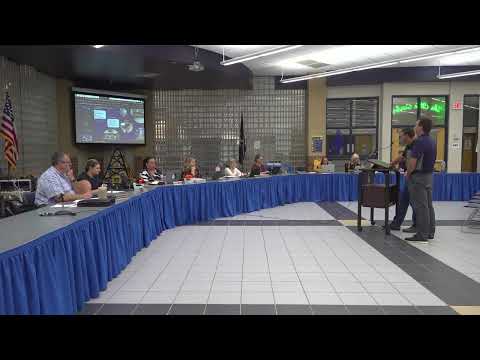
The Mt. Pleasant City School District presented a comprehensive update on bond-funded construction and technology work at its Sept. 16 Board of Education meeting.
District staff described completed and ongoing facility projects including roof and membrane replacements, a high-school athletic storage addition, cafeteria and kitchen renovations, boiler and pump replacements, installation of new chillers and air-handling units, parking and bus-loop improvements, and specialized shop renovations at the high school. Staff said some contractors remain on-site completing work and emphasized that retrofitting older school buildings for modern HVAC is an engineering-intensive effort.
The district’s technology lead (Jo) told the board the technology department now manages “a fleet of over 6,000 active Chromebooks” across the district, with one-to-one deployments at the high school, middle school and the Oasis program. Jo said repairs are handled in-house and reported last year’s Chromebook repair counts — 220 at the high school and 377 at the middle school — with broken screens cited as the most common issue. Jo said the district will begin cycling Chromebooks so incoming ninth-graders receive replacements and older machines are reconditioned for lower grades.
Jo described several software and infrastructure upgrades tied to bond spending and district operations, including FinalForms for online student registration, RealShare for parent communication and automated notices, upgraded core network switches to improve speed and security, and districtwide AV improvements in gyms and cafeterias. Jo said the district also placed 275 handheld emergency radios in buildings this summer with state safety-grant funding.
A board member asked whether rooftop chillers or other rooftop equipment affect sheltering and emergency procedures during tornado drills; staff replied systems were engineered for safety and that there is no change to established sheltering protocols. Board members also pressed for clarity on budgeting and staffing given construction escalation and the statewide shortage of skilled trades.
The technology presentation included examples of classroom and gym usage: Jo relayed feedback from a physical-education instructor that “the recent edition of the projector and sound system has been a hit with the students,” citing new opportunities for warm-up activities and assemblies. The district said IP-based PA systems, interactive displays and upgraded audio-video technology are being rolled out in phases.
Looking ahead, staff said remaining bond-funded work will continue through the next construction season, classroom AV devices will be replaced on a larger scale, and the technology department will refine distribution, repair and cycling plans for Chromebooks.
The board expressed appreciation for the progress and asked staff to return with cost forecasts and timelines for remaining work before major procurements.