Get Full Government Meeting Transcripts, Videos, & Alerts Forever!
Get email alerts on the Rental License Enforcement topic
No spam. Unsubscribe anytime.
Marinborough council debates higher fines, discretion for rental and mercantile license violations
Summary
Council members reviewed two ordinances (202522 and 202523) proposed for introduction that would raise fines to deter property owners from treating violations as a routine business expense; members discussed a $500–$2,000 fine range and how to structure minimums and repeat-offender penalties.
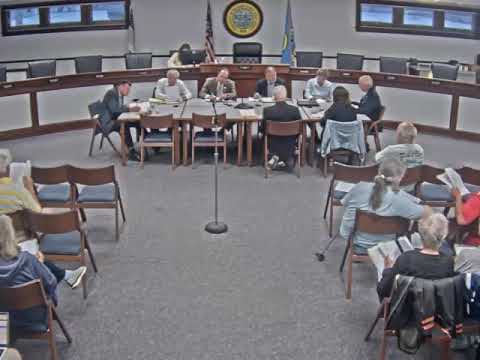
Marinborough council members on Aug. 21 discussed two ordinances — 202522 and 202523 — scheduled for introduction at the regular meeting that would tighten enforcement for rental-license and mercantile-license violations.
The proposals respond to instances in which property owners reportedly paid low fines rather than submitting to inspection or complying with licensing rules. Council members said some violations appeared to be treated as a routine business cost and that higher fines and clearer language are intended to change that calculation.
Council members debated the packet language and the minimum-fine phrasing. Members suggested replacing the existing wording with a specific minimum of $500 and a maximum of $2,000, leaving room for judicial or prosecutorial recommendation and discretion for repeat offenders. One council member noted prosecutors consider factors such as the number of offenses and time to compliance when recommending penalties, and the governing body discussed preserving judge and code-enforcement discretion for sentencing.
Council members also noted a packet-format issue: the version in the meeting materials lacked a clear numbering label for one rental-related provision, which could cause confusion about which penalty applies. No formal vote on either ordinance occurred during the work session; both were placed on the agenda for introduction and consideration at the upcoming regular meeting.
The council did not formalize escalated statutory minimums by offense tier during the work session, leaving the proposed range and discretionary language for further drafting and the regular meeting agenda.