Get Full Government Meeting Transcripts, Videos, & Alerts Forever!
Get email alerts on the Reentry Programs topic
No spam. Unsubscribe anytime.
Public commenters urge Erie County Council to revisit re-entry program decision, citing lack of due diligence
Summary
Multiple residents told the Erie County Council on June 22 that the county rushed its decision on the ECRSSA re-entry program, urged temporary funding while officials review records and asked the council to restore a two-reading ordinance process for major program actions.
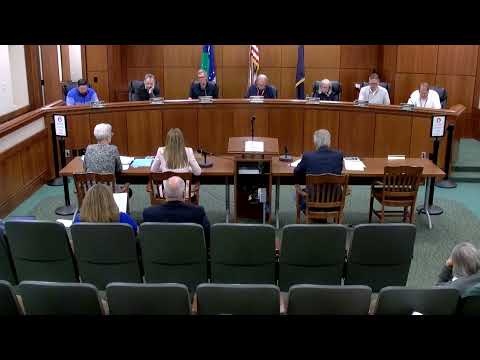
Several residents used the public-comment portion of Erie County Council’s June 22 meeting to press the council to reconsider its handling of the Erie County Re-entry Support Services Alliance (ECRSSA) and to demand greater transparency and a slower, more deliberate policymaking process.
Cindy Treiber told the council that when ECRSSA was first presented, “there had been 103 people over several months to come down here and speak on probation and parole and the transparency that was needed in this body,” and said that she believes the council did not perform adequate due diligence before moving on the program. She told the council it had time to pause and review records, saying, “We have documentation from right to know requests that cannot be falsified or fabricated,” and urged the council to fund the program short-term while the body investigates how the decision was handled.
Another commenter, Alan Brown, who described his work as a former senior case manager and a longtime re-entry program leader, said the program’s abrupt end has personal and community consequences. He said the program was built through substantial local effort and warned the council to consider the “fallout” of discontinuing services.
Several speakers said they were told the program’s termination date required urgency; Treiber and others disputed that claim, saying the program “was never ending March 1st” and that right-to-know responses show other timelines. Dave Yule of the City of Erie also urged the council to revisit the ECRSSA decision, saying the council “owes it to your constituents to fully examine the decision.”
At least one member of the public, Jen Paulson, asked whether a February pre-meeting with court officials had been recorded; according to an email she cited, attendees included Bob Cataldi and Beth Hersh. The chair declined to answer specifics from the dais, saying this was the public’s time to speak.
Several commenters requested formal changes to the county’s process: Treiber asked the council to restore a standard first-reading/second-reading ordinance timetable and to take 30–60 days for review before final decisions on comparable matters. Commenters also urged outreach to re-entry subject-matter experts, families and people affected by re-entry to inform any review.
The council did not take immediate formal action on the public requests during the meeting. The next council meeting is scheduled for July 31, 2026; speakers asked the council to use any interim time to examine records and consider temporary funding so clients are not left without services.
Ending: The council proceeded with its agenda after the public-comment period; no vote or motion to reopen ECRSSA was recorded on June 22.