Get Full Government Meeting Transcripts, Videos, & Alerts Forever!
Get email alerts on the Environment topic
No spam. Unsubscribe anytime.
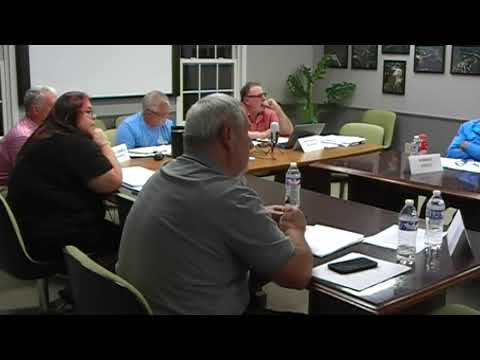
Board considers objective no‑wake interpretation for Autumn Lake amid spillway concerns
Summary
Raintree Plantation committee members reported spillway undermining and discussed a board endorsement to interpret covenants as 'no‑wake' whenever water flows over the spillway to protect the dam and shoreline; committee will gather further quotes and coordinate with conservation officials.
Committee members and experts reported concerns about water flowing under and around the Autumn Lake spillway that may be causing undermining and riprap movement, and discussed adopting an objective rule: treat any flow over the spillway (not caused by a board vote) as a trigger to place the lake under 'no‑wake' status to protect the dam and shoreline.
Committee presentations referenced work with the Soil & Water Conservation District and a Stormwater Division representative who recommended contractor silt fences at construction sites feeding runoff into the lake; members emphasized that controlling upland sediment is a cost‑effective complement to lake remediation. The committee recommended caulking seams on the spillway as a near‑term mitigation and solicited further bids for more extensive repair options.
Discussion also touched on the Army Corps of Engineers and state dam inspection roles; speakers noted that high wakes and larger modern boats may produce greater erosion than the lake's original designers anticipated. The board discussed endorsing an objective interpretation of covenant language that would place the lake under 'no‑wake' whenever water is flowing over the spillway (except when that flow is caused specifically by a board vote), to remove subjectivity from enforcement.
The board asked the lakes & beaches committee to bring back more technical quotes and an implementation plan for an operational 'no‑wake' threshold and for contractor compliance efforts on nearby construction projects.
Next steps: obtain additional repair quotes, consider formalizing an objective measurement for the spillway condition, and pursue coordination with conservation officials on runoff controls.