Get Full Government Meeting Transcripts, Videos, & Alerts Forever!
Get email alerts on the Fire Department Study topic
No spam. Unsubscribe anytime.
Troy leaders present fire-department study and launch 90-day task force to address ambulance strain
Summary
A consultant study found Troy's fire/EMS calls have roughly doubled since the 1990s and recommended a 90-day task force to prioritize staffing, deployment and funding changes; city officials endorsed the task force and highlighted short- and long-term options including dedicated peak units and revenue studies.
The Troy Public Safety Committee reviewed a consultant study on March 12 that concluded the city's demand for fire and emergency medical services has increased sharply and that the existing cross-staffed, city-run ambulance model needs immediate attention.
Consultant Charles Jennings of manitu Incorporated told the committee the study used interviews, member surveys, department and city financial data, and national standards to analyze operations. "Back in '96 ... the call volumes were 6,000. Fast forward here we are today over 13,000 calls," Jennings said, calling the rise a principal driver of current availability problems.
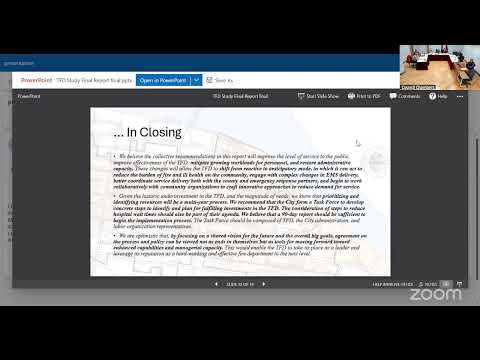
Mayor Carmela Mantello said the city will form a finite, 90-day task force to drill into the study's recommendations and prioritize implementable steps. "This is a plan that will be useful for years to come," the mayor said, adding the task force will seek both short-term fixes and longer-term funding, and that union and front-line personnel should be represented.
Chief soluchi described the department as understaffed and noted recent hiring gains. "We hired 26 in one year and we're putting six on tomorrow," the chief said, while cautioning that new recruits may remain in training before they count toward floor staffing. He said improvements will take time and that the task force should deliver a clear implementation path.
Jennings recommended retaining a fire-based EMS model while pursuing targeted staffing changes. Among the study's top operational priorities was converting Medic 3 from a peak-hour unit to a 24-hour staffed unit and pursuing dedicated staffing for key ladder and medic companies. The consultant also urged creating data and training roles — a GIS/data analyst and a full-time training officer — to support community-risk reduction and performance tracking.
The report highlighted that cross-staffing assumptions from earlier decades no longer hold: when ambulance personnel are dispatched, the fire companies they staff can become unavailable for other calls. Jennings said that mismatch contributes to longer response times and recommended the task force evaluate deployment, minimum-manning levels, and revenue options such as user or impact fees.
Committee members pressed panelists on hospital offload times and root causes. Panelists pointed to regional staffing shortages in hospitals and said state-level action will also be needed to address emergency-department delays. The mayor said the study provides data city leaders can use when working with state legislators.
The administration said some short-term funding has been covered with federal ARPA funds but warned those sources are temporary. Officials noted the city will need to identify sustainable revenue or policy changes — from impact fees on new development to negotiated contributions from large institutions — to support longer-term staffing goals.
The city opened the report and presentation for further review and committed to posting the full study online for the public. The committee took no formal vote on the report itself but agreed to the task-force approach and to continued engagement with union leadership and county dispatch partners as they refine implementation steps.