Get Full Government Meeting Transcripts, Videos, & Alerts Forever!
Get email alerts on the Planning Settlement topic
No spam. Unsubscribe anytime.
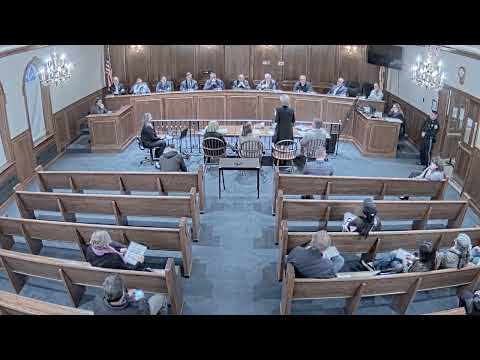
Old Tappan planning board approves settlement, reinstates site plan for TE Holdings assisted-living project
Summary
The Old Tappan Planning Board voted 7–2 to approve a settlement agreement and amend an earlier site-plan approval for TE Holdings (formerly CSH Ultan LLC), reinstating the board’s February 2023 approval and authorizing a modified site plan that relocates the stone portion of a historic house and adjusts stormwater basins. Residents raised concerns about wetlands, traffic and cultural-resource protections.
The Borough of Old Tappan Planning Board voted to approve a settlement agreement and grant an amended site-plan approval for the proposed assisted-living facility at 244 Old Tappan Road, restoring the board’s prior February 2023 decision that had been overturned on appeal and was the subject of litigation (docket BER-L-4189-23).
The board’s limited action reinstates its earlier approval and authorizes a modified site plan that, counsel for the applicant said, leaves the building footprint, parking and primary site layout unchanged while relocating the stone portion of a historic house to a position on the same lot rather than across the street. “The only change is that the historic house is going to be moved to the side instead of across the street,” applicant counsel Gail Price told the board.
Why it matters: The action resolves a pending lawsuit and allows the applicant to move forward with a previously approved assisted-living development while adding two engineering changes linked to the historic-house relocation: a shift in the detention basin and related drainage adjustments, and a conveyance of roughly 2.22 acres of environmentally constrained land to the borough by judicial decree, the applicant’s counsel said.
Technical evidence and protections: The applicant’s civil engineer authenticated an updated site plan (dated March 5 on the plan sheet) and testified the stone portion of the dwelling would be relocated about 120 feet to the southwest and would remain outside the regulated wetlands and the 50-foot transition area. He told the board the relocated basin is a like-for-like, above-ground bio-retention facility and that stormwater regulations would not permit an increase in off-site runoff: “The rates will not be increased. They’ll be less,” the engineer testified.
Counsel for the planning board and the governing body said settlement negotiations were lengthy, with dozens of revisions, and that the governing body approved the settlement earlier in the evening. Mary McDonald, representing the governing body, said settlement discussions “went on for many, many months” and that the agreement underwent multiple revisions.
Public concerns: Several residents pressed the board on construction safeguards, cultural-resource protection and traffic. Speakers asked for a Phase I cultural-resource or environmental assessment before ground disturbance, raised the possibility of human burials and artifacts on the property, and urged stronger preconstruction erosion and sediment controls and monitoring of potential contamination. One resident said the borough should require a remediation fund in case of future flooding or contamination; another asked that replanting funds be routed to the Environmental Commission.
Applicant response: Gail Price and the applicant’s representatives said any artifacts found during construction would be turned over to the borough and that bonding and developer guarantees would be required to protect the historic structure and site features. On the question of a Phase I assessment, counsel said such studies are commonly done and that the applicant would discuss the request with its client.
Vote and next steps: On a roll call, the board recorded seven votes in favor and two opposed; the motion carried. The board directed that a resolution reflecting the settlement and the amended site-plan approval be prepared for the record. Board members and borough staff noted that construction would be subject to standard preconstruction meetings, erosion-and-sediment control plans, county approvals for roadway work, and conditions in a forthcoming resolution and developer’s agreement. The relocation of the historic house, the bonding details for the move, and the timing of a judicial minor-subdivision order were confirmed as prerequisites or closely tied to the start of construction.
What remains unresolved: Residents’ requests for a formal Phase I cultural assessment and a quantified bond amount for the house move were not resolved at the meeting; counsel said bonding would be specified and vetted by the borough engineer and through the developer’s agreement. The board also did not adopt any additional traffic or remediation funds beyond conditions that were part of the earlier approval and will be reflected in the resolution and developer’s agreement.
The planning board adjourned after approving the settlement and the amended site plan. The transcript indicates the governing body’s action earlier in the evening reinstated the board’s prior approval, and the board’s resolution will formalize the conditions discussed at the meeting.