Get Full Government Meeting Transcripts, Videos, & Alerts Forever!
Get email alerts on the Energy Storage topic
No spam. Unsubscribe anytime.
Supervisors press California Energy Commission for protections as county energy storage project moves to state review
Summary
After extensive public comment about safety and farmland conversion, Santa Cruz County supervisors directed staff to send a letter to the California Energy Commission urging it to weigh the county's draft energy-storage ordinance, negotiate a community benefits agreement with the project developer and return any agreement to the board for approval.
Santa Cruz County supervisors voted unanimously June 30 to press the California Energy Commission (CEC) to give substantial weight to the county's draft energy storage ordinance and to negotiate binding local protections as a proposed 90 Mento Road battery energy storage project moves under state review.
Assistant Director Stephanie Hansen of the county's Community Development and Infrastructure unit told the board that New Leaf Energy withdrew its county application on May 7 and submitted an application to the CEC on May 27. "After that status is achieved the CEC has 270 days to approve the application or deny the application," Hansen said.
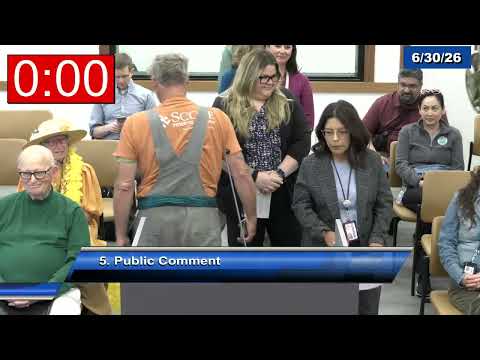
The board's action followed hours of public comment from residents and experts alarmed by safety concerns raised after the 2022 Moss Landing battery fire and by the possibility of converting agricultural parcels to industrial energy uses. Speakers urged the county to insist on strong siting rules, technical reviews and public oversight. Local public health, fire and planning officials also asked that the CEC engage with county departments as part of its environmental review.
Supervisor Cummings moved a package directing the chair to send a letter to the CEC that (1) transmits the county's draft ordinance and asks the CEC to substantially consider it; (2) requests the CEC explain any significant departures from county provisions; (3) asks that any ownership transfer for an energy storage facility require a noticed board hearing and board approval; (4) asks staff to pursue a community benefits agreement (CBA) with the developer and return the CBA to the board for approval; and (5) requests milestone updates from staff on the CEC review. The motion passed 5-0.
The board made clear the CBA must be returned to the board for final approval. Assistant Director Hansen said the CBA typically describes monetary contributions the project would make to local agencies (property taxes, sales taxes, fire district contributions), and that the county will negotiate terms such as a one-time lump-sum or annual payments. "It includes the property taxes that the project generates, the sales taxes that the project generates," Hansen said.
Supervisors also said the board expects county staff to actively participate in the CEC's environmental review, to coordinate input from county departments (fire, environmental health, public works), and to press the CEC to explain any differences if it does not follow specific county protections such as stronger agricultural replacement ratios and operator controls.
Public commenters who testified included technical consultants who said modern designs can include improved safety systems but urged the board to prioritize site access for emergency response; county residents and farmers warned against converting ag land and called for a 3:1 agricultural replacement requirement to offset lost farmland; community members asked for explicit restrictions on siting near schools and residences. At the public hearing, Becky Steinbruner, an environmental advocate, urged the board to evaluate the ordinance through a "public safety lens, not a cash cow," and asked for more transparent redlines in the draft ordinance.
Hansen noted the county had completed two years of ordinance work and that many elements of the draft ordinance reflect earlier board direction, but she said it was appropriate to "suspend continued processing of the draft ordinance" while the CEC proceeds with state-level review; the board's letter transmits the draft ordinance and documents the county's expectations.
Next steps: staff will send the board-approved letter to the CEC, negotiate a community benefits agreement with the applicant and return that agreement for board approval, participate in the CEC's environmental-impact review and provide milestone updates to the board as the CEC completeness and review process proceeds.