Get Full Government Meeting Transcripts, Videos, & Alerts Forever!
Get email alerts on the Redevelopment topic
No spam. Unsubscribe anytime.
Highland Park council explores zoning overlay to repurpose former Rite Aid at 332 Ritton Ave
Summary
Council members discussed a targeted redevelopment plan and overlay to allow urgent care, daycare, fitness and indoor-entertainment uses at the 15,000‑square‑foot former Rite Aid at 332 Ritton Avenue, and to negotiate an easement to improve rear parking connectivity; staff will return with a draft proposal.
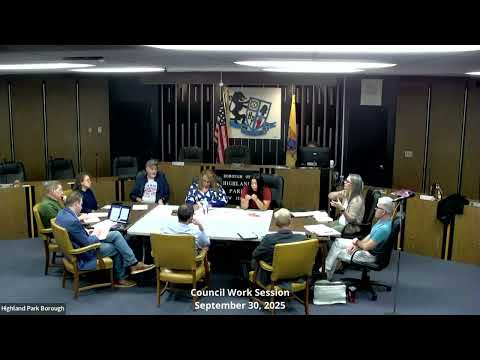
Highland Park council members spent the work session on Jan. 8 discussing options to reoccupy 332 Ritton Avenue, the 15,000‑square‑foot former Rite Aid that has sat vacant downtown.
Jason, a borough staff member, told the council the size and layout of the building make standard downtown zoning a poor fit and said the borough is considering a redevelopment‑plan overlay to expand permitted uses. “We’re dealing with a 15,000‑square‑foot former Rite Aid,” he said, framing the presentation around ways to attract a tenant sooner rather than later.
The plan under discussion would use an overlay zoning approach to allow a limited set of higher‑value uses not currently permitted in the Central Business District — examples cited included urgent care or surgical medical facilities, child daycare, fitness/indoor recreation and certain indoor entertainment uses — while also establishing design standards to preserve the Ritton frontage and protect existing art windows.
Chris Cassenza, the borough planner, reviewed the site’s legal history: the parcel was in a 2005 redevelopment area but later was removed by settlement, which narrowed the municipality’s available redevelopment incentives. “Back in 2005, it was declared an area need,” Cassenza said; after a later settlement the borough lost some financial tools such as PILOT arrangements for that parcel, so the overlay is being pitched as a zoning strategy to make the property marketable without immediate full redevelopment incentives.
Staff and council described how the overlay would work in practice: the municipality would negotiate a redevelopment agreement with a property owner or operator (if one is identified) that could attach an easement to connect rear parking between South Third and South Fourth, require a visible front entrance, and encourage — but not mandate — smaller storefront carve‑outs on the Ritton frontage to activate the street.
Council members raised practical concerns. Several members said daycare is an important local priority because of waiting lists and school‑age family retention, while others argued urgent care or other medical uses could bring later hours and more sustained evening activity that would animate the downtown. Jason and other staff emphasized the borough could tailor the overlay’s language — keeping it broad enough to attract operators but including reserved controls in any redevelopment agreement to disallow narrowly unwanted subtypes.
Staff also noted retrofit and approval costs: some site‑plan or use changes could incur soft costs staff estimated in the $50,000–$100,000 range for applications and design work, while minor interior occupancy changes might proceed more simply if exterior work is not required.
Members discussed the parcel’s package liquor license and ABC rules; borough counsel and staff warned such licenses and transfers can be legally and financially complicated and are not a straightforward municipal asset to acquire.
During public comment, Abby Stern Cardell of Highland Park urged the council not to include daycare among the suite of options, saying local Pre‑K expansion and daycare market conditions make a long‑term daycare tenant uncertain and that childcare operations raise security and outdoor‑space issues. “I would ask that when you’re putting the full suite of options out there that you don’t include a daycare,” she said. Ellen Wit asked whether an Immigrant Trust Act resolution would appear on a future agenda; staff said it will appear on the Oct. 21 agenda and that borough human relations staff will work on it.
No formal vote was taken on a redevelopment designation or overlay at the meeting. Council members repeatedly expressed support in principle for pursuing a redevelopment‑plan overlay as a tool to expand realistic reuse options for the Rite Aid site and to negotiate an easement, and staff said they will return with a more fleshed‑out proposal and proposed CBD zoning amendments for further public review.
Next steps: staff will draft the overlay/redevelopment plan language and circulate it to council and the public; the Immigrant Trust Act resolution was slated for the Oct. 21 agenda.