Get Full Government Meeting Transcripts, Videos, & Alerts Forever!
Get email alerts on the Safe Routes topic
No spam. Unsubscribe anytime.
Hutchinson council adopts updated Safe Routes to School plan after committee presentation
Summary
The Hutchinson City Council voted June 23 to adopt an updated 2026 Safe Routes to School plan after a presentation from Mid Minnesota Development Commission planner Blake Bernard. The plan adds the high school, summarizes a parent survey of 342 responses, and lists nine prioritized infrastructure and education recommendations.
HUTCHINSON — The Hutchinson City Council on June 23 adopted an updated Safe Routes to School plan intended to make walking and biking safer and more practical for students across the district.
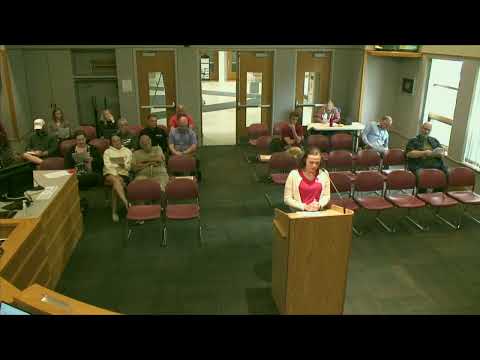
Blake Bernard, a transportation planner with the Mid Minnesota Development Commission, told the council the plan updates a 2015 document, expands coverage to include the high school and resulted from an 18‑month committee review that included school district, city, parks and law‑enforcement representatives. Bernard said the committee conducted site visits and a parent survey that drew 342 responses; findings showed nearly 65% of students live more than one mile from school and over a third live more than two miles away.
The plan identifies nine recommendations focused on intersection and crossing improvements, filling gaps in sidewalks and trails (including ADA connections), and measures to reduce conflicts during arrival and dismissal periods, especially at the middle and high school. Bernard said one example was a well‑worn pedestrian path across a field; the committee recommended a formal trail there and has since secured a grant to build it.
Council members asked site‑specific questions about priorities and costs. Bernard said the report uses general cost categories (low, medium, high) as ballpark estimates and does not create any immediate spending commitment. On Park Elementary he described installing a sidewalk on the west side of Lynn Road to eliminate a gap where pedestrians currently encounter a retaining wall. On Tiger Elementary the plan suggests engineering studies to evaluate a compact mini‑roundabout at the primary entrance to manage traffic flow.
Mayor and councilmembers emphasized the role of the plan as a grant‑seeking and prioritization tool rather than a work order. “This is in a plan and we’re approving it,” one council member said; staff confirmed the next step is a school‑board review and eventual online posting of the updated plan.
The council approved the plan by voice vote after a motion from Councilmember Tim. The plan is intended to guide future projects, help secure funding, and encourage education and encouragement programs to build walking and biking culture among families.
What happens next: staff said the school board will review and the city will post the document on its website so it can be used in grant applications and future capital planning.