Get Full Government Meeting Transcripts, Videos, & Alerts Forever!
Get email alerts on the Emergency Communications topic
No spam. Unsubscribe anytime.
Tennessee emergency radio network tested generators and refueled ahead of winter storm
Summary
An agency official said the Tennessee Advanced Communication Network tested and refueled backup generators and used monitoring equipment to track tower performance, prioritizing communications for police, firefighters and road crews during an approaching weather event.
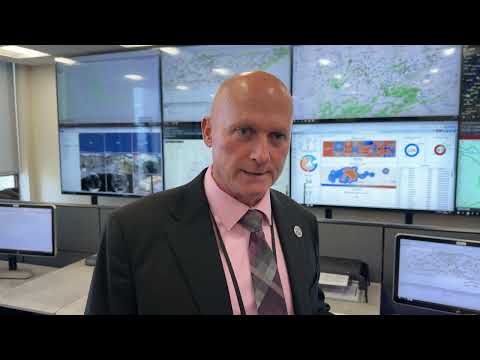
An agency official representing the Tennessee Advanced Communication Network said the state's emergency radio system has been prepped ahead of an approaching winter weather event, with crews testing and refueling backup generators to guard against power outages.
The official said the network, which supports the Tennessee Highway Patrol, the Tennessee Department of Transportation and road‑clearing crews, focuses on keeping first responders connected during storms. "The biggest threat to the radio system is going to be power outages," the official said.
To address that risk, the official said all tower sites have generator backup and that "all of our generators ... we've run tests on Tuesday, all of our generators have been refueled, ready to go." Monitoring equipment, the official added, allows technicians to confirm when a tower site is running on backup power and to check performance if ice accumulates.
The official warned that freezing precipitation can be particularly harmful: "Ice can stick to a tower infrastructure to the antennas," which could affect signal effectiveness. The network's monitoring systems are used to detect such issues and assess whether towers remain operational on backup power.
Officials described who relies on the system: "the police officers, the firefighters ... the people that are out there actually clearing the roads in responding to accidents," the official said, noting responders need to communicate with dispatch and with one another to coordinate emergency response.
The official said the system was built redundantly to avoid failure under adverse conditions, and reiterated that preparatory steps taken now — generator testing, refueling and active monitoring — are intended to preserve those critical communications throughout the weather event.
No formal actions, votes or statutory citations were discussed during the briefing. The agency did not provide a named spokesperson in the transcript; the statements above are attributed to the agency official who presented the briefing.