Get Full Government Meeting Transcripts, Videos, & Alerts Forever!
Get email alerts on the Mosquito Spraying topic
No spam. Unsubscribe anytime.
Resident urges alternatives to neighborhood mosquito spraying, cites neighborhood survey results
Summary
During public comment a resident from Clemson Downs asked the committee to coordinate with the city to avoid broad mosquito spraying that she said harms pollinator gardens; she reported roughly 90 responses to a neighborhood questionnaire (about 75 opposed spraying and 27 in favor).
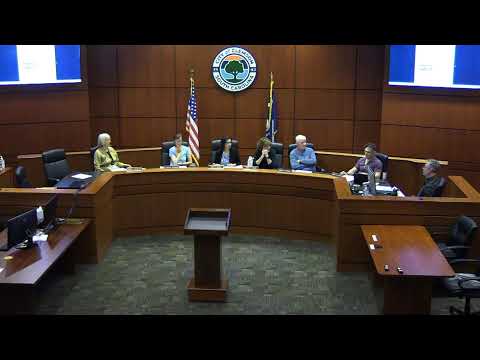
A resident from Clemson Downs urged the Sustainability Advisory Committee to work with the city on alternatives to broad mosquito spraying after reporting neighborhood survey results and describing local pollinator efforts.
The commenter said property owners in Clemson Downs had voted previously to stop mosquito spraying because many residents are immune-compromised and maintain pollinator gardens; she reported that a questionnaire sent to 138 homes returned roughly 90 responses, with about 75 saying they did not want spraying and 27 saying they did. The resident asked the committee to help the city consider targeted options and to bring education and mitigation strategies to neighbors.
Committee members acknowledged operational challenges raised by the resident — including that trucks typically fog entire streets and that spot exclusions are difficult when spraying occurs from a moving vehicle — and said the city has opt-out mechanisms and a process to request a community-wide vote. Members said any change will need coordination with city staff and the public works operation.
The resident also raised health and environmental concerns, citing SPCA literature she said links pesticide exposure with increased cancer rates in dogs; committee members did not challenge that citation in the meeting but said more coordination with the city's public-health and public-works staff would be necessary to identify feasible alternatives.
The committee agreed to note the public comment and recommended coordination with city staff to examine opt-out mechanics and communication strategies for residents who wish to preserve pollinator gardens.