Get Full Government Meeting Transcripts, Videos, & Alerts Forever!
Get email alerts on the Food Waste topic
No spam. Unsubscribe anytime.
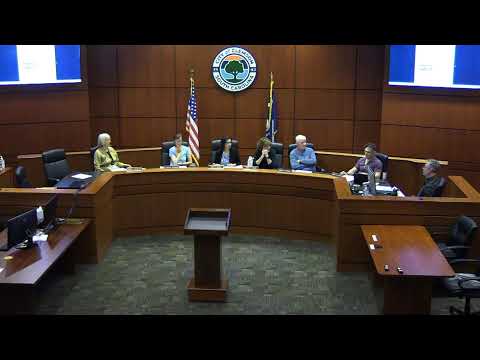
Clemson committee weighs food‑waste fixes; agrees to consult with Goodr and university compost operators
Summary
Committee members discussed partnering with food-recovery firms (example: Goodr), expanding Clemson Compost capacity, and resident compost subscription services; they recommended meeting with Goodr and campus compost staff to evaluate logistics and costs.
A Sustainability Advisory Committee member urged the committee on May 13 to pursue food-recovery and composting partnerships to reduce the large share of edible food sent to landfills.
The presenter outlined three complementary approaches: recruit for‑profit food‑recovery firms such as Goodr to collect edible commercial food for redistribution; explore resident-facing subscription compost services; and ask Clemson Compost (the university facility) whether it can expand capacity beyond campus sources.
The presenter said Goodr and similar companies pick up prepared or unsold, still‑safe food from commercial kitchens and redistribute it to people or to organized free grocery outlets, and that the business case becomes viable when multiple large sources participate. “Goodr... they take food out of the waste stream and feed it to people, primarily,” the presenter said. The presenter also described examples where airports and universities have used similar models.
Committee members asked practical questions about profitability, logistics and whether the university composter could be a local receiving site. One member recommended setting up short, individual meetings with Goodr and with Clemson Compost to get concrete numbers and to determine what volume of sources it would take to make a local Goodr operation feasible.
The committee agreed as a next step to invite Goodr and university compost representatives to a future meeting or ask members to request a short, individual meeting to gather details. Members noted that many grocery stores already donate some food to local food banks, and that larger producers (banquets, churches, restaurants and campus dining) are priority targets for food recovery rather than individual households.
Next steps: committee members will request meetings with Goodr and with Clemson Compost, gather data on potential waste volumes and cost/benefit figures, and keep the topic on the agenda for a future meeting.