Get Full Government Meeting Transcripts, Videos, & Alerts Forever!
Get email alerts on the Public Safety topic
No spam. Unsubscribe anytime.
Village emergency services report improved cardiac-arrest outcomes, urges CPR training
Summary
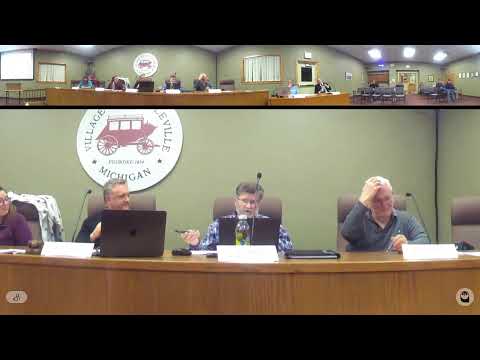
At the March 10 Middleville Village Council meeting, a presenter reviewed annual EMS statistics showing faster response times and higher-than-average out-of-hospital cardiac-arrest return-of-spontaneous-circulation (ROSC) rates; the presenter urged residents to take free quarterly CPR classes at Township Hall.
A village presenter reviewed Middleville-area emergency response and patient-outcome data Tuesday, reporting response-time improvements and stronger-than-average results for out-of-hospital cardiac arrests.
"Out of the 15 cardiac arrests in our service area, we had 10 which had ROSC," the presenter said, using the acronym for return of spontaneous circulation. He told the council that the 66.7% ROSC rate exceeded national out-of-hospital averages and credited bystander CPR in many successful cases. The presenter also said crews aim for faster dispatch and on-scene times and that the department offers free CPR and first-aid training at the Township Hall.
The presenter gave several timing benchmarks: a target of about 40 seconds dispatch-to-out-the-door during daytime staffing, average in-town response roughly 8 minutes, and outside-township averages near 11 minutes. He said identification and routing times for patients with ST-elevation heart attacks (STEMI) and strokes had met or beaten national identification targets in the last year.
Why it matters: faster recognition and bystander CPR are linked to improved survival after cardiac arrest; the department highlighted community training as a low-cost intervention residents can take. The presenter said most successful resuscitations in the report had CPR started before first-responder arrival.
Council members thanked the department for the data and noted plans to keep the department reporting quarterly. The presenter said the department will continue outreach to increase CPR attendance and will return with updated figures at a later meeting.