Get Full Government Meeting Transcripts, Videos, & Alerts Forever!
Get email alerts on the Parks Greenways topic
No spam. Unsubscribe anytime.
Great Rivers Greenway presents Centennial Greenway study to University City Council; construction eyed for 2028–29
Summary
Great Rivers Greenway briefed the University City Council on a study to connect a Centennial Greenway segment from Heman Park to I‑170, outlining an outreach plan, a possible funding model used on a nearby Vernon project, and projected design (2026–27) and earliest construction (2028–29) timelines.
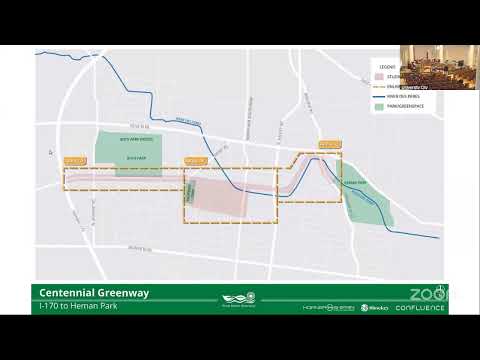
University City — At a council meeting, Great Rivers Greenway representatives presented a study plan to explore a Centennial Greenway connection through University City from Heman Park to the existing greenway at I‑170.
"My name is Gabby Danback. I'm a civic engagement manager for Great Rivers Greenway," said Gabby Danback, summarizing the agency’s role as the regional multi‑county public agency that plans and builds greenways in St. Louis City, St. Louis County and St. Charles County. Mara Perry, the project manager, showed the study area and described the proposed connections into existing greenways.
The presentation described the project as a study phase this year, followed by design work that "would take us through 2026 into 2027," with the earliest likely construction window in "2028 or 2029," pending funding and approvals, Perry said. The team proposed early stakeholder meetings, an open house in the study sequence, follow‑ups with boards and commissions and a consultant‑led alternatives analysis before returning to council with a report.
Perry noted that one nearby project on Vernon — a separate county‑led effort — used a funding match in which Great Rivers Greenway contributed 25 percent, St. Louis County contributed 25 percent and federal grants covered the remaining 50 percent for that specific Vernon roadway‑and‑path project. She framed the Vernon example as illustrative of potential partnership approaches for sections of the Centennial study, not as an approved funding plan for University City.
Council members focused questions on the practical effects of routing and operations. Council member Fuller asked who would handle long‑term maintenance; Perry said Great Rivers Greenway typically discusses operations and maintenance early in the planning process and then executes operations and maintenance agreements with the local entity that will assume responsibility after construction, whether that is the county or the city.
On routing, Perry said the team prefers public right‑of‑way and cannot use eminent domain; she described the Vernon segment (a separate county process) as planned along the north side of the street with a 10‑foot shared‑use path and a buffer from traffic. Council member Clay asked specifically about Olive and other local corridors raised by a 3rd Ward task force; Perry said connections to Olive and other walkability priorities can be part of the study and that the team will examine multiple route alternatives.
The presenters emphasized floodplain and floodway constraints and said they will coordinate with the University City School District and other local groups to account for environmental and institutional constraints when refining routes.
Gabby Danback identified herself as the main community engagement contact for the project; Perry said she is available for technical questions. Council staff confirmed GRG already presented to the parks commission and that outreach to the traffic commission is planned or under discussion.
There was no vote or formal action at the meeting. Council members thanked the team and the meeting adjourned.
Next steps: GRG will carry out stakeholder meetings and community outreach as outlined, hold an open house in the study sequence, develop alternate routes with consultants and return to the council with a report before advancing to design.