Get Full Government Meeting Transcripts, Videos, & Alerts Forever!
Get email alerts on the County Budget topic
No spam. Unsubscribe anytime.
Commissioners confront a roughly $1 million gap as offices seek clerks, training and insurance funding
Summary
During a lengthy budget discussion, county elected officials and department presenters sought full-time clerks, requested training and postage transfers, and examined assumptions behind revenue projections; commissioners said significant cuts or multi-year adjustments will be required to close a roughly $1 million shortfall.
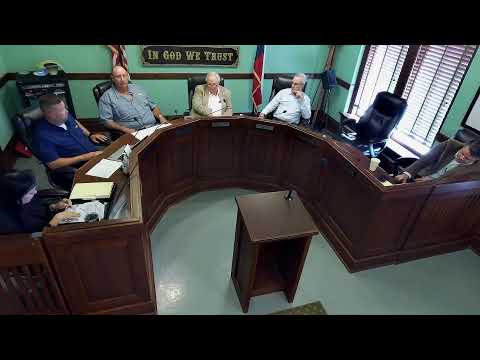
Trinity County commissioners spent much of a July 7 special session debating an emerging budget shortfall, staffing requests and assumptions about collection and valuation rates that underlie projected revenues.
Several officeholders asked for full-time clerks and modest line-item transfers to cover training and postage. One presenter said her office brings in steady revenue and that adding a full-time clerk would increase collection capacity. Commissioners and staff said they would examine office-by-office needs, consider grants for equipment and personnel and asked departments to submit more detailed budgets to determine which positions are essential.
Much of the session focused on broader budget math: speakers questioned prior assumptions about collection rates used in projections (one staffer said prior projections were based on collection rates around 99% while another said historical realizations are nearer 93%). Commissioners warned that compounding small differences in collection assumptions can create large budget gaps over several years; one commissioner estimated the county could be about $1,000,000 short if collection rates and valuations fall short of projections.
Other items under discussion included health insurance budgeting (a stated planning figure of about $14,000 per full-time employee per year), fuel-price impacts on operational budgets and whether certain special funds should be consolidated or eliminated. Commissioners did not adopt a final set of cuts during the special session but directed departments to refine their requests and suggested the court may need multi-year planning rather than one-time fixes.
What’s next: Departments were asked to submit detailed budgets and line-item justifications; commissioners signaled they will prioritize preserving core services while identifying possible efficiencies and grants to offset costs.