Get Full Government Meeting Transcripts, Videos, & Alerts Forever!
Get email alerts on the Academic Engagement topic
No spam. Unsubscribe anytime.
Mount Pleasant board hears academic engagement update emphasizing 'bite‑sized' professional development
Summary
District administrators told the board they are making classroom observation tagging mandatory, using heat maps to guide instruction, and promoting short, modeled professional development like exit tickets and 'turn and talk' to boost student engagement.
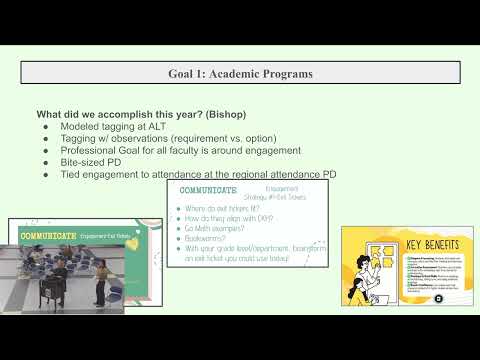
Administrators presenting the academic goal of the district's strategic plan told the Mount Pleasant Public Schools Board of Education on Jan. 5 that the work will hinge on focused instructional practices, consistent observation tagging and quick, classroom‑level professional development.
The superintendent opened the mid‑year report and the engagement team said the initiative "is not about doing extra things. It's about scaling back and doing fewer things, but with purpose," a presenter said. The team cited the Charlotte Danielson framework as the backbone for a common evaluation language.
Why it matters: Board members were shown how district leaders plan to use data from classroom observations to identify trends and direct targeted supports. Presenters said heat maps and tagging will make it easier to give teachers prompt, specific feedback instead of broad, infrequent reviews.
Administrators described three concrete moves: making tagging mandatory in the observation tool so evidence of strategies is captured in real time; using heat maps to spot areas of growth across grades and buildings; and rolling out "bite‑sized" professional development embedded in staff meetings. One presenter said the district has begun modeling classroom activities at staff meetings so teachers can practice techniques like turn‑and‑talk and write sentence stems for their next lessons.
Board members asked how the district defines a quality turn‑and‑talk and how teachers are coached to use exit tickets meaningfully. Presenters responded that they provide grade‑level examples, model the activities for teachers and ask teachers to collect artifacts (lesson plans, exit tickets) to show evidence of implementation. On observations, administrators said they do frequent pop‑in checks (about 15 minutes) and require post‑observation reflections; the contract allows up to 10 days for written feedback but observers typically provide comments earlier.
"We gave examples of kind of what that would look like at the different levels when we presented at the staff meeting, and then ask teachers to do that same thing and ask them to give feedback," one presenter said, describing how the practice is scaffolded from elementary to high school.
The district will review tagging data at the end of the year and during professional learning rounds in March to adjust supports and share thematic findings with principals and teachers.
The superintendent said the district's goal is to use observation data to provide rapid, specific feedback rather than to create a "gotcha" environment: "We're not in a gotcha moment with our staff," an administrator told the board.
Next steps: The district will finalize heat‑map reports after the next round of tagging and bring updated data to the board; administrators will continue modeling turn‑and‑talk at staff meetings and refine the bite‑sized PD offerings.