Get Full Government Meeting Transcripts, Videos, & Alerts Forever!
Get email alerts on the Land Use Rezoning topic
No spam. Unsubscribe anytime.
Council approves rezoning for Elder Road parcel despite reservations about septic and utilities
Summary
The Mishawaka Common Council on July 6 approved Ordinance 2026-21 to rezone a parcel on Elder Road from I-1 (light industrial) to R-1 (single-family), after public testimony from the property owner and a staff explanation that on-site septic — not municipal utilities — is the only practical option for now.
The Mishawaka Common Council voted to approve Proposed Ordinance 2026-21 on July 6, rezoning a parcel on the west side of Elder Road from light industrial (I-1) to single-family residential (R-1). The measure passed after public comment by the property owner and a city planning staff presentation about the property’s infrastructure limits.
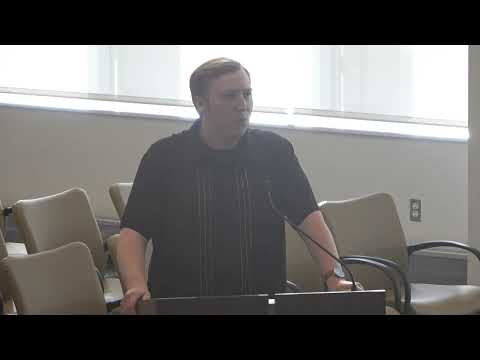
Todd Lang, who said he recently purchased the property and that his family has owned it for decades, told the council he intends to develop the land for a family residence and that municipal sewer and water are not available at the site. "My name is Todd Lang. 554 West 10th Street," Lang said, describing the lot’s history and the practical need for a well and septic system for any home on the site.
Ken Prince, director of planning and community development, told the council the parcel was annexed in 1966 under different standards and that extending sewer or water from the nearby HomeStreet connection would be impractical unless large additional development occurred. "If they ever choose to expand over time, they could easily extend water and sewer for their own needs," Prince said of adjacent property owners, but he added that extending service through private property is not a practical option for the single parcel now under consideration.
Prince said the city’s zoning rules allow single-family development on septic and well systems when public utilities are not available, but require larger lot sizes without public sewer and water (roughly 15,000 square feet without utilities versus about 6,600 square feet when served by public utilities). He recommended approval of the R-1 rezoning as a less-intensive use than industrial development.
Several council members expressed concern that allowing a standalone septic system could set a precedent if the surrounding area later converted to residential use. The council president cited those concerns but said he would vote for the rezoning to return long-vacant land to productive use. The clerk polled members and the ordinance was recorded as passing (clerk read responses from Hazen, Volker, Benicki, Emmons, Hahn, Mamalenti, Veoli and Hixenbach as "Yes").
The action changes the parcel’s zoning designation; annexation status and utility availability remain as described by staff and the owner. The council’s vote completes the second-reading action recorded at the meeting; next steps will follow the city’s ordinance-recording procedures.