Get Full Government Meeting Transcripts, Videos, & Alerts Forever!
Get email alerts on the Zoning Ordinance Boarding Houses topic
No spam. Unsubscribe anytime.
Old Tappan council finds proposed ban on boarding houses consistent with master plan; ordinance language to prohibit CSLRs and similar uses
Summary
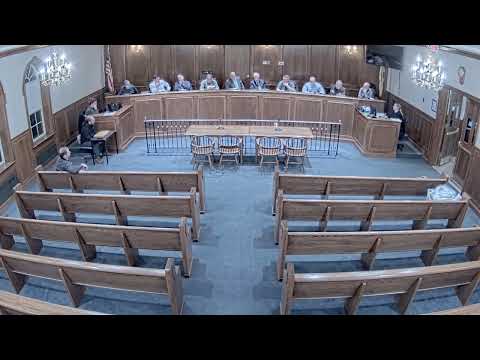
The Borough of Old Tappan's mayor and council agreed to language prohibiting boarding houses—including transitional living arrangements, halfway houses and recovery residences—in residential districts and voted to find the draft ordinance consistent with the master plan. Council recorded nine affirmative responses on the roll call.
The Borough of Old Tappan mayor and council voted to find newly introduced zoning language that would bar boarding houses and related recovery or transitional living facilities in residential districts consistent with the master plan.
During new business, a council member recounted a neighboring town's experience with a Department of Community Affairs (DCA) application for a cooperative sober-living residence (CSLR) that prompted extensive local legal work and a withdrawn state application; that history prompted a recommendation to amend the borough's ordinance to make the borough's position explicit. The member said the previous local ordinance in that town simply stated that "boarding houses are prohibited," and that straightforward language had been effective.
Chair (speaker 2) read suggested language provided by the borough zoning officer, Anna: "boarding houses, including but not limited to transitional living arrangements, halfway houses, recovery residences, and similar uses shall not be considered a 1 family dwelling for the purpose of this ordinance and are prohibited in residential districts." The chair also relayed a building-department note that a state letter from Robert Kenny indicated once the state approves certain boarding-house uses, the state may assume regulatory authority over use purposes.
The council discussed scope and definitions: members asked whether the ban should apply across all residential district types (including multifamily housing), whether commercial zones or overlay zones could accommodate such uses, and whether terms such as "transitional living" should be defined to avoid future loopholes. One council member noted the need to balance specificity with the risk that new terms could be created later; another said a concise prohibition has been effective elsewhere.
After discussion, a motion that the introduced ordinance is consistent with the master plan and "promotes the goal of the master plan to protect residential neighborhoods" was made, seconded and carried on a roll-call vote. The clerk recorded affirmative responses from council members as follows: Mister Mulhara (yes), Mister Wetsy (yes), Mister Jones (yes), Kaufman Morthen (yes), Kaufman Boyd (yes), Mister Bogdan (yes), Mister Kramer (yes), Mister Chris O'Hara (yes) and one additional affirmative (names as read during roll call). The roll call recorded nine "yes" votes; no "no" or abstentions were recorded in the transcript.
Chair and other members said they wanted to ensure affected neighbors had notice; one member raised concerns about a neighborhood reference ("Cripple Bush") and the limits of discussing details on the public record because the matter may appear later as an application. The council also noted the zoning officer's suggestion to clarify language to avoid vagueness flagged by a previous commenter (Bob Rush).
The council did not adopt a final ordinance text on the record in the transcript; the vote recorded in the meeting was a finding of consistency with the master plan. Next procedural or drafting steps were not specified in the transcript.