Get Full Government Meeting Transcripts, Videos, & Alerts Forever!
Get email alerts on the Local History topic
No spam. Unsubscribe anytime.
Deacon Jim narrates Bloomsdale history at St. J. B. Museum program
Summary
At a St. J. B. Museum Learning Center program, Deacon Jim narrated Laurie Ballard’s local history of Bloomsdale—tracing founding families, early businesses, schools and civic institutions—and offered copies of the book and USB drives to attendees.
Deacon Jim, the program’s narrator, traced the history of Bloomsdale from its late-18th-century settlers through 20th-century businesses and civic life at a presentation at the St. J. B. Museum Learning Center.
The presentation grew out of Laurie Ballard’s research —“This book is a result of an inspiration that started with a school project,” Deacon Jim said — which began with a third-grade assignment and later expanded into a documentary and book that Ballard completed in 2001 after years of courthouse research and interviews. Deacon Jim credited local residents and archival records for much of the material.
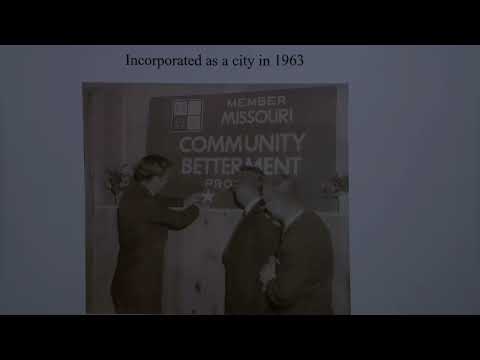
Why it mattered: the hour-long talk documented infrastructure milestones, local institutions and family businesses that shaped daily life in Bloomsdale. Deacon Jim highlighted key dates attendees cited as turning points: a municipal water system installed in 1965, a sewer system added in 1980 and phased electrification in the mid-20th century. He also recounted civic moments — from the Knights of Columbus’ role in social life to local beautification awards that sent community members to Washington, D.C.
The talk mixed archival photographs and oral anecdotes. Among the stories was an account of a 1933 tornado that damaged the church roof but left the school building intact; Deacon Jim said the congregation then buried a priest inside the old church and later moved his remains to the cemetery when a new church was built. Relating another anecdote about an apparently ill-fitting log that nevertheless fit during construction, Deacon Jim said, "It's a miracle."
The presentation also recounted business histories — Bader’s mercantile, the old mill and the creamery — and civic records, including the Bank of Bloomsdale’s organization in 1914 and two remembered bank robberies (March 25, 1933, and June 30, 1980), which the narrator placed in local recollection rather than as contemporaneously verified court filings.
Moderator announcements framed the program: the museum promoted recurring family offerings including Dino Lab and Fossil ID (last Wednesday of each month) and a new Discovery Kids series; the moderator told the audience, “Our 1st Discovery Kids series will be this coming Saturday, May 2 with Scott Darryl.”
At the end of the program, the presenters offered copies of Ballard’s book and USB drives containing supplemental material for purchase; the moderator noted limited stock and provided pickup instructions.
The program was presented as a community history event rather than a formal civic hearing or legislative meeting. Attendees were encouraged to follow up at the museum for copies of the book and to participate in upcoming museum programs.