Get Full Government Meeting Transcripts, Videos, & Alerts Forever!
Get email alerts on the Budget topic
No spam. Unsubscribe anytime.
Crockett council reviews FY2027 draft budget, flags water‑tower and wastewater repairs and asks staff for cost options
Summary
City staff presented a draft FY2027 budget and a list of capital needs — including fire hoses, fleet replacement, a pad‑foot roller and a failing wastewater clarifier — and warned a South Loop water tower shows paint flaking that could trigger TCEQ enforcement. Council directed staff to return with detailed financing, voter‑approval and cost‑of‑living scenarios.
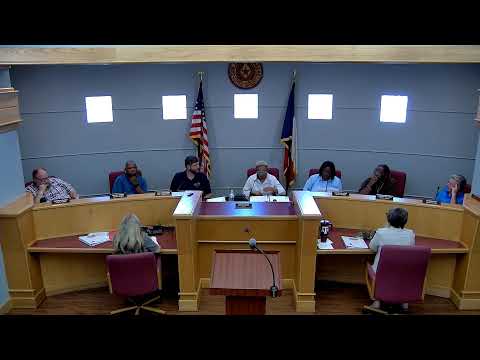
City of Crockett staff presented a draft fiscal‑year 2027 budget at a council workshop and outlined several near‑term capital and maintenance needs that could affect the tax rate and utility revenues.
The presentation, delivered by a city staff member, said the draft budget currently shows a modest surplus of about $71,000 but includes several outstanding estimates and capital requests. "As our draft budget has been put together, the initial draft budget, we have a revenue we have a surplus, basically, of 71,000," the presenter explained, noting that certified property values and state changes to business personal property exemptions will reshape final revenue projections.
Why it matters: staff warned that deferring critical repairs could lead to regulatory action. The water tower inspection for the tower above the state school on the South Loop "is showing, beginning to show paint flaking, rust deposits, and some, a few small pinhole, rust," staff said, and added that if left unaddressed the Texas Commission on Environmental Quality (TCEQ) could issue findings, penalties or an enforcement order. For the city’s South wastewater plant staff reported a failed bull gear on a clarifier and estimated a rehabilitation scope in the neighborhood of $320,000 (subject to detailed specifications and bids).
What council discussed: the council reviewed multiple capital requests and trade‑offs: - Fire services: the fire chief requested $20,000 for replacement hoses. After discussion about existing inventory and immediate need, council signaled support for about half the request and asked staff to return with exact cost estimates for a reduced purchase. - Fleet and equipment: public‑works staff detailed aging trucks (noting replacement candidates dating to model year 2002 with high mileage) and asked for a crew‑cab replacement to improve crew transport and reduce downtime. Council requested options that include used‑truck trade‑ins and financing versus outright purchase. - Streets equipment: staff recommended investigating purchase of a pad‑foot roller and a street broom (sweeper). Staff reported rental costs running in the thousands per month and suggested a used pad‑foot roller could be found for $30,000–$40,000; new units run substantially higher. Council asked staff to model lease and financing options. - Utilities: staff emphasized that some repairs cannot wait. In addition to the water tower, the clarifier at the South wastewater plant is currently out of service; staff said the North‑plant rehabilitation earlier cost roughly $350,000 and that this smaller clarifier would still require several hundred thousand dollars to rehabilitate.
Compensation and revenue choices: staff provided a sample cost‑of‑living adjustment (COLA) scenario — a 10% increase would cost roughly $372,000 across general and utility funds (excluding certain department heads). Council debated whether to fund raises within the current draft budget, reallocate savings, or pursue a voter‑approval rate (VAR) increase to expand revenue. Council did not vote to raise taxes at the workshop; instead, it voted to direct staff to prepare detailed VAR and COLA scenarios and return with concrete numbers and funding options for future deliberation.
Transparency and next steps: a council member pressed for itemized department spending and check‑register detail so elected officials can evaluate reallocations; staff said activity reports and receipts are available and offered to provide tailored reports on request but cautioned that compiling very granular, line‑by‑line printouts for a $12 million budget is time‑consuming. Staff also outlined EDC wind‑up items and the treatment of a USDA note, noting an available EDC fund balance of roughly $600,000 that could be applied to outstanding obligations.
The council’s directions: without approving tax increases, the council voted to have staff bring back: - modelled revenue and tax scenarios tied to the voter‑approval rate; - itemized COLA/cost‑of‑living scenarios at multiple percentage levels and department scopes; and - financing and leasing options for prioritized capital requests (hose purchases, a street broom, fleet replacement, and equipment such as a pad‑foot roller).
The workshop concluded with staff committing to return with cost estimates, financing options and the requested itemized reports for further council consideration.