Get Full Government Meeting Transcripts, Videos, & Alerts Forever!
Get email alerts on the Streets For All topic
No spam. Unsubscribe anytime.
Presenter outlines 'Streets for All' plan to convert Kalamazoo downtown from one-way highway-style roads to two-way, people-focused streets
Summary
A city presenter described the 'Streets for All' vision to change downtown Kalamazoo from highway-style one-way streets into two-way, slower streets with bike lanes, pedestrian space and on-street parking, funded in part by federal grants and expected to take multiple years to build.
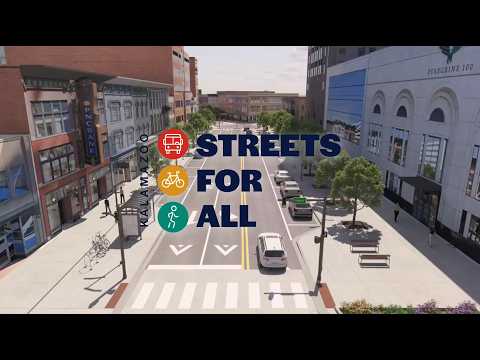
A presenter for Kalamazoo City on Thursday described a Streets for All plan to remake the city’s downtown streets from highway-style, one-way corridors into two-way, people-focused streets.
The presenter said the current layout — redesigned in the 1960s — routes "huge one-way roads" through the heart of downtown and uses "design standards you'd see on a highway," including the intersection of Kalamazoo and Douglas, which the presenter said has wide sweeping turns and highway-width lanes. The presenter added that the city gained ownership of the downtown streets in 2019, enabling officials to start redesigning them.
The plan would convert one-way streets to two-way traffic to slow vehicle speeds and create a more traditional city-street environment, remove highway-style curves in favor of neighborhood-scale intersections, and reroute through traffic away from the Stewart neighborhood. "People have shared through public input that having to cross five lanes of high speed traffic just across the street feels dangerous, uncomfortable, and simply isn't what they want their community to look and feel like," the presenter said.
Among specific design elements referenced, the presenter said Michigan Avenue would receive more pedestrian space, dedicated bike lanes set off the roadway, and on-street parking while maintaining vehicle flow. The presenter framed these changes as supporting both safety and downtown vitality: slower speeds and better crossings for pedestrians, separated facilities for people biking, and easier access and parking for businesses.
Funding for the effort, the presenter said, includes federal grants that provide what they described as a "once in a generation opportunity" to remake infrastructure built in the past. The presenter cautioned the work will require time and patience during construction and emphasized ongoing community engagement as designs are implemented.
The presenter summarized anticipated beneficiaries as people walking and biking who would be separated from cars, drivers who would find more convenient routes, downtown businesses that would retain easier access and parking, and residents and visitors who would gain a more lively downtown.
The presentation did not include specific project timelines, engineering details, or dollar amounts; those were described as to be determined as planning continues. The city said public input shaped early concepts and that further community engagement will continue as the project moves forward.