Get Full Government Meeting Transcripts, Videos, & Alerts Forever!
Get email alerts on the Building Permits topic
No spam. Unsubscribe anytime.
East Hampton board weighs striking 15‑day permit deadline as building department promises to cut backlog
Summary
Town staff recommended removing a 15‑day automatic‑issuance clause from the building code, warning it could undermine safety reviews; builders urged a predictable deadline. The building department said new hires and process changes should clear the backlog by year’s end.
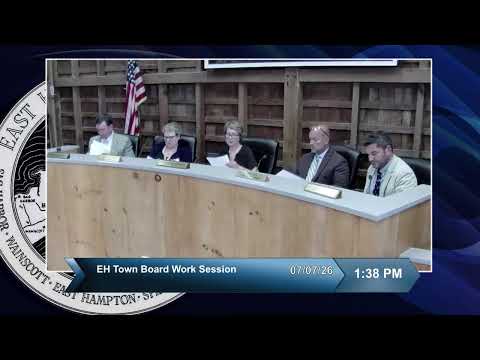
Jake Turner, a town presenter, told the East Hampton Town Board on July 7 that striking the code’s phrase requiring permit action "in all events within 15 days" is necessary because an automatic shot‑clock could clash with New York State building‑code obligations and produce unsafe, unreviewed approvals. "That is simply not legally possible," Turner said, arguing the language can be misleading to the public and operationally unworkable.
Builders who addressed the board urged the opposite. Michael Forst, chairman of the East End chapter of the Long Island Builders Institute, told the board his membership "is not in favor of the code change for the 15‑day rule" and asked the town to retain a clear deadline so firms can plan staff and projects. A caller who identified himself only as Mark said an actual standard "makes us able to plan and staff and prepare to execute projects," adding that an open timeline hampers project planning.
Rich Normoyle, the town’s chief building inspector, briefed the board on operational improvements and the permit backlog. He said the department is recruiting plans examiners and a principal building inspector, has reorganized intake work in OpenGov, and now reviews applications submitted in late January and early February — a pace he characterized as about "16 to 20 weeks" behind current submissions. Normoyle said the department expects to clear the backlog by the end of the year and to meet a new target turnaround of roughly 6–8 weeks thereafter. "We fully expect to meet our target wait times on permit issuance by January 1," he said.
Board members and staff debated compromise language. Several members said they do not want an automatic issuance trigger that would risk unvetted approvals; others argued that leaving no timetable leaves applicants without predictable recourse. Suggestions included tying any deadline to a "completed application," carving out time for outside‑agency reviews (board of health, county agencies), or setting a longer fixed deadline (for example 60 days) without an automatic permit issuance.
No formal vote was taken; the board asked staff and counsel to redraft the language and bring back a revised local law for review and public notice. Next procedural steps discussed were further outreach to the building community, additional legal review, and scheduling a public hearing before adoption.