Get Full Government Meeting Transcripts, Videos, & Alerts Forever!
Get email alerts on the Pro Bono Delivery topic
No spam. Unsubscribe anytime.
Podcast: Pro bono lawyers say remote services expanded access; keep client choice post-pandemic
Summary
On LSC's Talk Justice podcast, leaders in legal aid and pro bono described how remote intake, clinics and court appearances improved access for clients during the pandemic and urged keeping flexible, client‑centered options going forward.
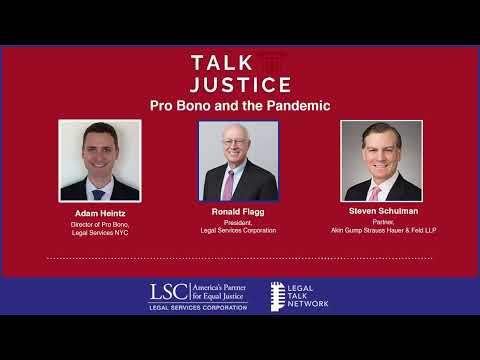
Ron Flagg, president of the Legal Services Corporation, opened a Talk Justice podcast episode on how the COVID‑19 pandemic changed pro bono and legal‑aid delivery and what practices to retain.
Adam Heintz, director of pro bono legal services at Legal Services NYC, said his organization moved quickly from in‑office outreach to expanded phone‑ and video‑based intake, helped by an existing access line and emergency funding. "We were lucky to have some funding from LSC to help support us in that work," Heintz said, describing investments in laptops, webcams and expanded hours to keep services running remotely.
Heintz said demand soared: many clients had never been eligible before the pandemic and faced urgent needs for food, housing and health care. Legal Services NYC set up a large public‑benefits clinic—"three clinics a week for 11 months"—that helped "more than 1,000 clients" apply for cash assistance, SNAP, Medicaid and other benefits, he said.
Steve Schulman, pro bono partner at Akin Gump Strauss Hauer & Feld and immediate past president of the Association of Pro Bono Counsel, described the pro bono community's parallel shift. He said remote court proceedings and remote clinics reduced travel and long waits that often kept unrepresented tenants from accessing hearings: "More than 90 plus percent of tenants in DC are not represented," he said, adding that moving courts online "really eliminated both travel time for people and also wait time for people and made courts much more accessible." Schulman cautioned that some clients lack technology and stressed creative fixes such as providing Zoom rooms at legal‑aid offices.
Both guests highlighted cases where remote processes improved safety and participation. Schulman noted that remote hearings for protective orders helped survivors avoid being physically proximate to alleged abusers: a lawyer on a breakout call told panelists that Zoom hearings were "far better for her client population." He also described a technology workflow using a Salesforce‑based app (Quip) for DACA applicants that allowed document uploads and iterative review, enabling the program to assist "well over 300 people" without traditional in‑person clinics.
Heintz said remote clinics were also more efficient and productive for staff and volunteers. "We were maybe doing around 70 a year pro bono clinics" before the pandemic, he said. "Now we're doing north of a 150 clinics a year in the remote setting," and client no‑show rates for some clinics fell markedly. He added that surveys of clients served during the pandemic found about three‑quarters favored at least some remote interaction.
Both guests recommended keeping a client‑choice approach: offer in‑person, remote, or hybrid options depending on client needs and preferences. Schulman urged advocates and legal‑aid leaders to push courts not simply to revert to pre‑pandemic operations for convenience, saying the question should always be "why are we doing it this way?" and emphasizing the unseen costs of in‑person requirements such as lost wages, childcare and travel.
The episode framed the pandemic not as an end point but as an experiment in new delivery tools. Flagg closed by thanking the guests and noting that meaningful retention of innovations will require leaders to prioritize client needs and continue pushing courts and funders to support flexible, accessible models.
The podcast includes a standard disclaimer that guest remarks are their own and do not constitute legal advice.