Get Full Government Meeting Transcripts, Videos, & Alerts Forever!
Get email alerts on the Shelter Expansion topic
No spam. Unsubscribe anytime.
Gift of God shelter plans to seek planning-board approval for expanded emergency and transitional beds
Summary
Melissa King told the Community Development Committee the Gift of God shelter will ask the planning board on July 21 to approve reconfigured space that would increase emergency shelter capacity to 28 beds and preserve upstairs units as transitional housing; staff said an operational plan and clarity on volunteers and code compliance remain outstanding.
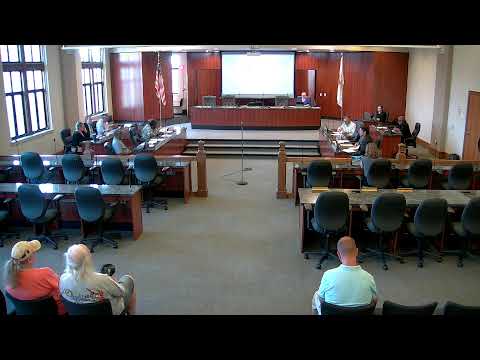
Melissa King told the Kankakee City Community Development Committee on July 6 that the Gift of God emergency shelter is preparing a planning-board filing to reconfigure its 5th Avenue facility and increase shelter capacity.
King said the proposal would move women’s sleeping areas downstairs and add bunk beds to create 14 beds on each side of the building — “14 for men, 14 for women, for a total of 28 emergency shelter capacity beds, and then upstairs… 12 total upstairs,” she said. The upstairs units would be intended for transitional housing rather than overnight shelter.
The committee was told the building already contains the upstairs layout King described and that the immediate work would not be major rehabilitation. King said adding capacity downstairs relies on a dormitory-style layout that, she believes, complies with fire and building-code requirements after consultation with Fire Captain Moy: “I’ve walked the space with Captain Moy from fire, and he feels like it’s fine and there’s capacity for what they’re trying to do down there,” she said.
Why it matters: Committee members and staff said the change would be a substantial increase from the shelter’s present occupancy. The chair said the proposal appears to move the facility from roughly 19 beds to as many as 40 beds when combined with upstairs units, calling it “a pretty substantial increase.” Committee members pressed for details about staffing, bathrooms and an operational plan that would explain volunteer coverage and length of stay for transitional tenants.
King and ECDA staff said an operational plan is still being finalized and that the shelter will need to present that material and any code updates at the planning-board hearing. King also said pursuing transitional-housing eligibility may help the shelter secure certain grant competitive advantages: staff are assisting the shelter with grant connections that may prioritize providers offering transitional units alongside emergency beds.
Committee members asked whether the city code defines ‘‘transitional housing’’; staff said city code likely does not, and that funder rules and grant requirements often define acceptable timeframes. One participant summarized the common operational range: “Transitional housing is approximately 3 to 24 months depending on the individual,” another participant noted during the meeting.
Next steps: King said the shelter is expected to appear at the planning board on July 21. Committee members requested that staff verify earlier permit conditions (for example, whether prior conditional-use approvals imposed minimum on-site staffing or volunteer levels) and confirm any required bathroom or code upgrades before the planning-board hearing.
The committee did not take any formal action on the shelter at the July 6 meeting; staff said the planning-board review is the next procedural step.