Get Full Government Meeting Transcripts, Videos, & Alerts Forever!
Get email alerts on the Aging Services topic
No spam. Unsubscribe anytime.
Area Agencies on Aging director urges funding to clear home‑care and meal waiting lists
Summary
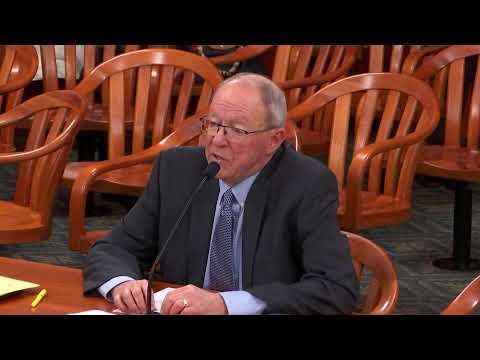
Dave LaLumia, executive director of the Area Agencies on Aging Association, told the House Appropriations Subcommittee on Public Health that Michigan faces growing demand for home‑and‑community services and nutrition programs and requested $8 million to address HCBS waiting lists and $2 million for nutrition waiting lists; members probed workforce, rebalancing and a federal Medicaid waiver option.
Dave LaLumia, executive director of the Area Agencies on Aging Association, told the House Appropriations Subcommittee on Public Health that Michigan’s aging population is driving higher demand for home‑and‑community services and nutrition programs and asked the subcommittee to consider one‑time funding to address longstanding waiting lists.
LaLumia said AAAs—the 16 regional area agencies that serve all 83 Michigan counties—perform formal community needs assessments, develop care plans and coordinate a statewide network of more than 1,300 contracted providers. He summarized five AAA service categories: planning and advocacy; access and navigation; home‑and‑community based services; nutrition and daily living; and caregiver and workforce support.
"This is an important demographic, and Michigan must act to ensure that older adults can age with dignity, choice and access to care," LaLumia told the committee. He cited a FY25 MDHHS analysis and said Michigan’s population aged 65 and older grew about 38% from 2010 to 2025 and now represents "over 25%" of the state’s population.
Why it matters: LaLumia said strong community supports can prevent residential long‑term care admissions and reduce Medicaid spending. He told members the Older Americans Act funds and state Older Michiganians Act funds braid with Medicaid and local millage dollars to deliver services across the state.
Key funding and waiting‑list request LaLumia told the committee the FY26 federal Older Americans Act appropriation routed to AAAs is $67,800,000. He also referenced the state Older Michiganians Act appropriation listed in the committee handout (the transcript phrasing of that figure was unclear); LaLumia additionally reported general‑fund waiting lists of "over 6,700" people for home‑and‑community services and about 1,500 people waiting for meals.
He asked the subcommittee to consider funding the waiting lists at an estimated $8,000,000 for home‑and‑community services and $2,000,000 for nutrition programs so AAAs could develop and implement care plans for people currently waiting.
Service scope and costs LaLumia said Title III funds account for the bulk of Older Americans Act spending in Michigan—about 72%—and that nutrition programs are a major share of that funding. He cited FY25 Michigan totals of roughly 1.5 million congregate meals and 8.5 million home‑delivered meals, and said the average cost per delivered meal was about $6.15.
On costs of home‑based versus institutional care, LaLumia said the annual cost for a My Choice recipient (a Medicaid program) is less than half the average annual per‑resident cost of nursing‑facility care, giving the state an avenue to reduce long‑term costs by investing in community services.
Workforce and administration Members pressed on provider capacity. LaLumia acknowledged ongoing challenges recruiting and retaining direct care workers but said recent increases in legislatively supported wage funding (cited as a $3.40/hour increase tied to appropriations) and revised Medicaid rates have improved conditions. He said actuaries build a 5.5% administrative factor into Medicaid program rates; he did not have a comparable percentage for Older Americans Act administrative costs and said AAAs are compiling that data.
Rebalancing and federal option LaLumia said Michigan lags other states on Medicaid 'rebalancing'—the share of long‑term care spending directed to home‑and‑community based services—reporting the national average near 53% while Michigan is below 30%. He flagged a federal provision in 'HR 1' that would permit states to seek a Medicaid waiver to serve people needing HCBS without requiring nursing‑facility eligibility and said $100 million in federal planning funds were made available nationally to help states explore that option.
Committee response and next steps Members asked for details on how additional dollars would be spent; LaLumia described a process where AAAs would assess individuals (using RNs and licensed social workers) and contract with community organizations to implement individualized care plans. He offered to send the FY25 report and a brief summary of the federal waiver option to committee staff for distribution.
Procedural matters Representative Steele moved to approve minutes from 06/03/2025 and Representative O'Neil moved to approve minutes from 03/03/2026; both were accepted with no objection. A motion to excuse absent members was also carried. The subcommittee adjourned with no further action taken on new appropriations.
What the committee can follow up on: members requested clearer administrative cost breakdowns for Older Americans Act and Older Michiganians Act spending, a plan for sustaining any waiting‑list reductions over time, and the FY25 MDHHS statistical report LaLumia cited. LaLumia indicated he would provide the requested materials to staff.