Get Full Government Meeting Transcripts, Videos, & Alerts Forever!
Get email alerts on the Professional Licensing topic
No spam. Unsubscribe anytime.
Committee hears testimony on bills to repeal outdated counselor relicensure rules and remove disclosure requirement
Summary
The House Health Policy Committee heard testimony on a multi-bill package (HB 4902–4904) intended to remove outdated relicensure exemptions for counselors and to eliminate a redundant "professional personal disclosure statement" from renewal applications; the Department of Licensing and Regulatory Affairs signaled support for the changes.
The House Health Policy Committee took testimony on a package of bills aimed at removing outdated relicensure language for licensed counselors and streamlining renewal requirements.
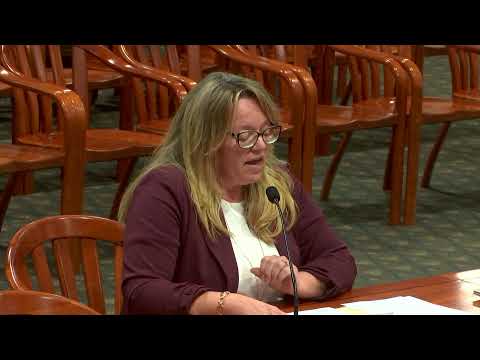
A committee presenter described House Bill 4902 as repealing an antiquated provision that allowed temporary licenses for people who had participated in counseling for at least five years before 1991, saying the provision applied only "before 1991" and should be formally repealed because licensing structures have since been formalized and streamlined.
Matt Criado Cono, speaking on behalf of state Representative Luke Meerman, summarized House Bill 4903 as a "simple proposal to remove and revise outdated relicensure language" in the public health code by striking a provision that had exempted practitioners who completed a degree before Oct. 1, 1991, and practical experience before Oct. 1, 1993, from having to retake state examinations for relicensure.
Another presenter described a related bill in the package (recorded in the transcript as one of the sponsors’ bills) that would eliminate an antiquated requirement that renewal applications include a "professional personal disclosure statement," noting that the code of ethics for licensed professional counselors (LPCs) and limited licensed professional counselors (LLPCs) already requires informed-consent documents. The presenter said the Michigan Department of Licensing and Regulatory Affairs supports the legislation.
Committee members asked no substantive questions during the recorded testimony. Clerk reads of witness cards recorded several parties who declined to speak but who had filed support or opposition cards, including Christopher DeBoer (listed as president, Michigan Mental Health Counselors) and Dr. Sue Schaeffer (listed as Michigan licensed professional counselors) among others.
No committee vote on these bills is recorded in the transcript; presenters offered to answer questions later if requested.