Get Full Government Meeting Transcripts, Videos, & Alerts Forever!
Get email alerts on the Curriculum Textbooks topic
No spam. Unsubscribe anytime.
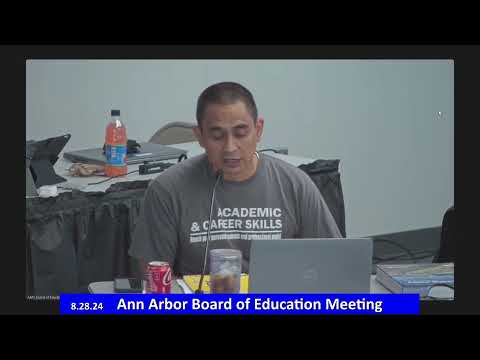
Board hears recommendations for AP Psychology and Physics textbooks amid OER debate
Summary
Curriculum staff recommended adopting the 4th edition Myers AP Psychology textbook ($45,964.38 including six years of digital licenses) and Halliday & Resnick AP Physics materials ($38,059.30 including one-year digital licenses); trustees discussed open educational resources, license lengths and delivery timelines but took no adoption vote at this meeting.
District curriculum staff presented two textbook recommendations for AP courses and fielded trustee questions about cost, format and alternatives.
For AP Psychology, staff recommended Myers' AP Psychology, 4th edition, at a total cost of $45,964.38. The purchase would supply slightly more books than enrollment and include six years of digital licenses, which staff said aligns with the updated 2024–25 AP framework and provides both physical and online options for students.
For AP Physics, staff recommended Halliday & Resnick Fundamentals of Physics for a total cost of $38,059.30, covering 215 textbooks and one year of digital access. Trustees asked why physics has a one-year license while psychology was presented with a six-year license; district staff and teachers explained publisher licensing practices and noted that some publishers no longer provide multiyear licenses at reasonable cost.
Trustee discussion centered on cost-saving options and instructional control. Trustee Terrell raised the potential of Open Educational Resources (OER) and asked the board to consider whether the district could develop or adapt in-house materials over time; curriculum staff said the district has written courses before but that AP audit and college-board expectations create a high bar for approved materials.
Staff said both purchases are intended to update texts that—where used—were approximately 10 years old, and they expect delivery in six to eight weeks so books would be in students' hands this school year.
Why it matters: Textbook adoptions affect instructional alignment, student access to college-level materials and multi-year budget commitments for digital licenses. Trustees signaled interest in exploring OER as a longer-term strategy but did not vote on the recommendations at this briefing.