Get Full Government Meeting Transcripts, Videos, & Alerts Forever!
Get email alerts on the Utility Permits topic
No spam. Unsubscribe anytime.
St. Clair County delays permit approvals for Alabama Power pole project, seeks plan to keep one lane open
Summary
County commissioners voted to withhold permits for a large Alabama Power pole replacement project until the utility and county agree on a plan that preserves at least one travel lane and limits roadway damage. Engineers warned the current plan could require 21–24 days of six‑hour closures without mitigation.
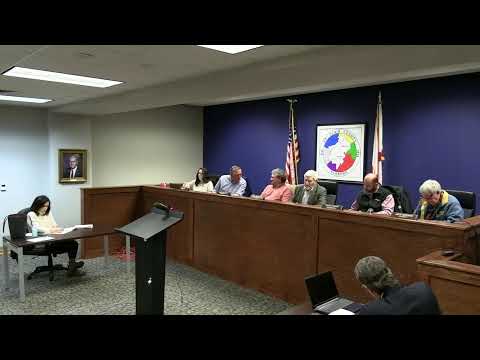
St. Clair County commissioners on Monday agreed to withhold permits for a large Alabama Power pole replacement project until the utility and county reach an agreement to keep traffic moving and protect county roads. The commission’s action follows an engineer’s briefing that the utility’s current plan could close significant sections of roadway for about six hours on roughly 21–24 days as crews set 90‑ to 120‑foot concrete poles.
County Engineer Dan Dahlke described the scope of the work and told commissioners that although utility crews had placed poles, they had not submitted the formal permit detailing traffic control and right‑of‑way use. "They're gonna have to close the road down while they're doing this," Dahlke said, noting the impact on school buses, emergency access and daily traffic flow. He recommended the county require at least one lane remain open and explore building temporary pads or widening shoulders so heavy equipment does not damage the new surface.
Commissioner Jeff Brown moved that the county not issue permits until Alabama Power and county staff reach an agreement on traffic control and the relocation plan for poles at the far end of the project; the motion was seconded and carried on a voice vote. The commission asked staff to prioritize work on the five poles located on county right‑of‑way and to find an engineering solution that creates an 11‑foot lane or similar measure sufficient to allow one lane of traffic during construction.
Commissioners and staff discussed practical mitigations: requiring the utility to time work outside school-bus windows, staging additional crews, using timber pads or outriggers to reduce pavement damage and collaborating on combining utility and county right‑of‑way where feasible. Dahlke noted weather, equipment setup and teardown times mean a single pole may require several hours of staging even with careful planning.
The commission directed county staff to continue consultations with Alabama Power and to return with explicit permit conditions and a traffic‑control plan. There was no immediate change to the utility’s schedule reflected in the meeting record; commissioners emphasized they would protect county pavement life and emergency access as permit conditions.