Get Full Government Meeting Transcripts, Videos, & Alerts Forever!
Get email alerts on the Zoning Text Amendment topic
No spam. Unsubscribe anytime.
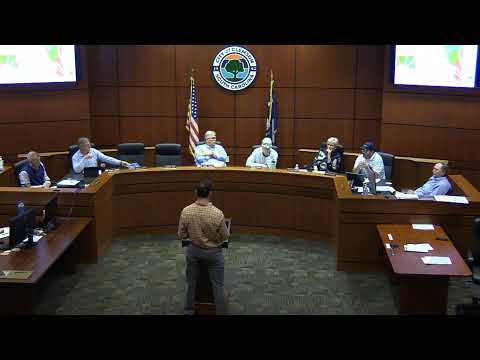
Commission sends middle‑housing text amendment and student‑housing district concept to council after broad discussion
Summary
The Planning Commission voted to forward a comprehensive middle‑housing text amendment — allowing townhouses, quadplexes and an optional middle‑housing district with design controls and affordable‑housing incentives — and discussed a proposed Student Housing District that would allow greater height near campus.
The Planning Commission voted to send a positive recommendation to City Council on a comprehensive text amendment that establishes middle‑housing standards and creates a middle‑housing zoning district concept. Staff characterized the ordinance as a framework to permit duplexes, townhouses and up to four‑unit buildings in select zoning districts, while retaining architectural review and BZA oversight to preserve neighborhood character.
Jacob Peabody (planning staff) said the amendment is intended to broaden housing types available in Clemson — aiming to increase walkability and provide more options other than student housing — while including safeguards: occupancy limits (generally capped at two per unit in middle‑housing types), Board of Architectural Review (BAR) design standards, and deed‑restricted affordable‑housing density bonuses tied to HUD‑style definitions (80% area median income) so only income‑eligible households can access the bonus. Staff said the middle‑housing district itself would be created as a new zoning tool but not mapped automatically to any parcel; map placement would follow a separate policy process.
Commissioners probed how the ordinance would avoid inadvertently incentivizing student‑oriented developments, asking about deed‑restriction enforcement, parking minimums and potential grandfathering of existing single‑family homes. Staff said the affordable units would require deed restrictions and income verification; BAR and BZA review would control appearance, parking location and lot coverage, and staff will propose parking minimums and maximums case by case. Commissioners and residents debated tradeoffs: parking maximums to discourage excess vehicle storage versus practical needs for some nearby developments.
Staff also introduced a Student Housing Zoning District concept that would allow higher base heights (proposed base of 7 stories in specified areas) and conditional height increases tied to direct access to campus parcels; the commission discussed parking‑ratio adjustments and safety considerations for higher‑density student uses. Commissioners asked staff to circulate a draft ordinance and encouraged further neighborhood outreach before mapping any district.
The commission’s positive recommendation on the middle‑housing text amendment advances the ordinance to City Council; additional drafts and workshops on implementation details and the student‑housing district were requested.