Get Full Government Meeting Transcripts, Videos, & Alerts Forever!
Get email alerts on the Religious Activities Policy topic
No spam. Unsubscribe anytime.
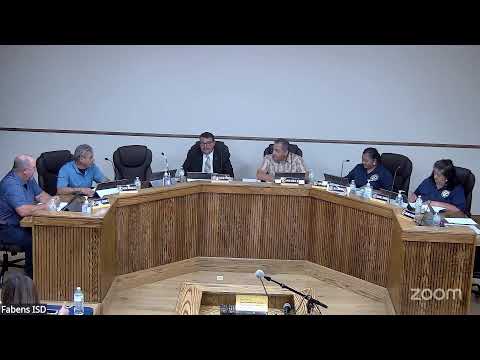
Fabens ISD board votes to decline adopting daily prayer/reading policy under Senate Bill 11
Summary
After staff outlined the consent, supervision and accommodation requirements in Senate Bill 11, the Fabens ISD board voted to decline adopting a district‑wide daily period for prayer or religious text reading, citing concerns about instructional minutes and administrative burden.
The Fabens ISD Board of Trustees voted to decline adoption of a district policy under Senate Bill 11 that would authorize a daily period for prayer or the reading of religious texts.
Staff reviewed SB 11 and told trustees the law (effective Sept. 1) allows districts to adopt a policy authorizing a daily period of voluntary prayer or religious reading but requires a recorded board vote, signed consent forms from parents or employees, procedures to keep nonparticipants out of earshot, and administrative tracking. "The law directs the Texas attorney general to defend districts against lawsuits challenging the implementation of policies authorized by Senate Bill 11," staff said.
Board members raised scheduling and supervision concerns, arguing the policy could reduce instructional minutes or require additional paid supervision. One trustee warned the district would need to "accommodate for each and every religion" and questioned how a single scheduled period could fairly serve multiple faiths. Staff responded that participation would be voluntary and existing clubs and the moment of silence would remain available for students who wish to pray outside a formal district program.
After discussion a trustee moved to decline implementing the SB 11 policy; the motion was seconded and the board voted in favor. The district will continue to allow voluntary prayer and religious expression outside of scheduled instructional time under existing federal First Amendment protections, staff said.
The action followed the board's review of the statute's consent and administrative requirements; no implementation procedures or consent forms were adopted during the meeting.