Get Full Government Meeting Transcripts, Videos, & Alerts Forever!
Get email alerts on the Emergency Services topic
No spam. Unsubscribe anytime.
WESC annual report: rising costs, strong KPIs and volunteer housing, council hears
Summary
WESC officials told Lititz Borough Council that emergency call volume and equipment costs are rising, but local volunteer and apparatus plans are keeping KPIs high; council discussed funding, volunteer incentives and regional staffing options.
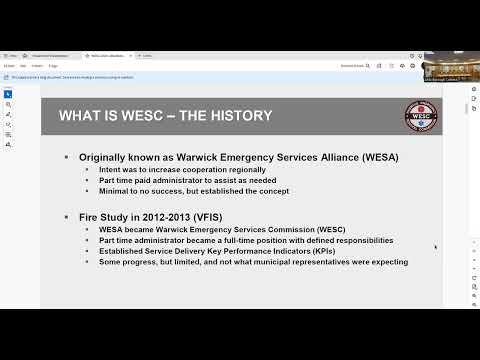
Mike Smith, deputy fire commissioner with the Warwick Emergency Services Commission (WESC), told Lititz Borough Council that regional emergency call volume and equipment costs are rising while local performance indicators remain strong.
Smith said the WESC intergovernmental agreement splits costs by population (Elizabeth Township 19%, Lititz Borough 29%, Warwick Township 52%) and noted the borough’s 2026 commitments include roughly $104,000 toward the WESC budget and a $96,500 contribution to the apparatus fund. He warned of supply‑chain pressures in the fire truck market: “If we literally order a fire truck tonight, it would be 5 years until it gets delivered,” Smith said, and that a ladder truck bought in 2024 for just under $1.1 million could cost about $2 million today.
Smith reviewed emergency medical services (EMS) funding and coverage, describing Warwick EMS as a 24/7 paid agency that relies on membership subscriptions and invoiced fees. He said subscription rates are low (about 25% in the region) and that improving outreach could materially reduce municipal per‑capita support. “If the 25% subscription rate went to 50%, that would make a huge difference,” Smith said.
On firefighting, Smith highlighted strong operational KPIs: Lititz Fire Company responded within its 9‑minute on‑scene KPI 98% of the time and met a qualified crew KPI 100% of the time. He noted Lititz had about 479 calls last year and that the department’s apparatus‑replacement plan and refurbishments (including a $172,000 rebuild of a 2009 engine) are central to long‑term planning.
Council members raised recruitment and retention concerns. Smith described local incentives that aim to keep volunteers living close to the station: four rental units offered at two‑thirds of market rate and a home‑purchase assistance loan of up to $20,000 for qualifying members. He also described a duty‑crew program that pays roughly $100 for staffed weekends or special events.
Council discussion focused on whether and when to move from volunteer to paid staffing. Smith and members said the trigger would be sustained call‑volume growth (approaching 600–700 calls) or an inability to keep volunteers living locally; any paid model would likely be regional and based out of the Lititz station.
The presentation concluded with council members urging continued public outreach about EMS subscriptions and affirming the borough’s financial role in long‑term apparatus planning.