Get Full Government Meeting Transcripts, Videos, & Alerts Forever!
Get email alerts on the Clean Energy topic
No spam. Unsubscribe anytime.
Alex Gault, Green Bay clean‑energy connector, outlines outreach results as role ends
Summary
Alex Gault delivered a final report to the Sustainability Commission summarizing outreach and metrics from a roughly two‑year campaign, citing 98 kilowatts of rooftop solar added, 21 uses of one IRA rebate (about $123,000 saved) and data‑tracking limits that make full impact measurement difficult.
Alex Gault, the city’s clean‑energy connector, gave a final wrap‑up of his outreach campaign at the Green Bay Sustainability Commission meeting and urged the commission to maintain the public resources he created.
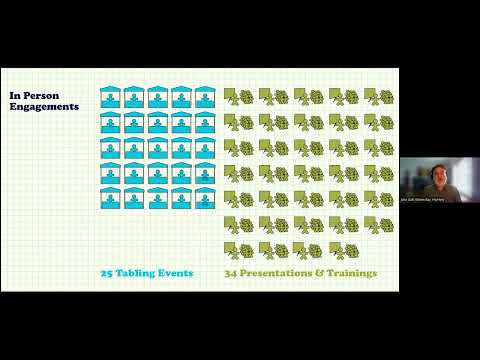
Gault outlined the scope of his outreach: tabling at roughly 25 events, 34 presentations and trainings, thousands of printed booklets and an online hub intended to keep resources available after his departure. “This is my final campaign wrap up,” he told the commission as he reviewed the project’s timeline and materials.
He offered concrete program numbers. “Our solar program added 98 kilowatts of rooftop solar PV to Green Bay,” Gault said, and reported that one rebate program tied to the Inflation Reduction Act (IRA) had been used 21 times, which he described as saving Green Bay residents about $123,000 as of Jan. 1. He said the IRA homes rebate had been used once, saving a homeowner $10,000, and that Focus on Energy had paid for 16 home assessments tied to that program.
Gault cautioned that precise performance tracking is limited. “One of the chief frustrations with this work is that the impacts are difficult to track,” he said, noting privacy and data limitations that kept the campaign from measuring kilowatt‑hour or therm savings directly.
Commissioners pressed for more granular metrics and asked about policy changes at the federal level. When asked how recent federal legislation affected local incentives, Gault summarized the law’s effect as making homeowner tax credits effectively unavailable while adding complex restrictions for businesses, nonprofits and tax‑exempt entities. He said some measures—such as commercial and school ground‑source heat pump incentives—were left intact and that certain restrictions were scheduled to sunset on July 4.
Krista, the commission chair, thanked Gault on the record and the commission agreed to receive and place his report on file. Gault noted that his official position ends March 31 and urged the commission and staff to keep the city’s Resilience and Sustainability hub and the distributed materials updated so the work can continue.
What happens next: the commission placed Gault’s presentation on file and discussed follow‑up steps for preserving the informational resources he created.