Get Full Government Meeting Transcripts, Videos, & Alerts Forever!
Get email alerts on the Charter Review topic
No spam. Unsubscribe anytime.
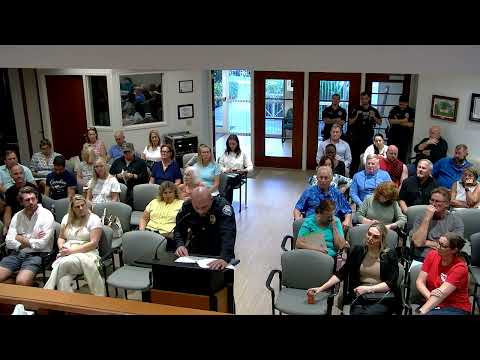
Lake Clarke Shores council approves first reading of charter-cleanup ordinance amid debate over mayoral powers and runoffs
Summary
The council approved first reading of Ordinance 2026-02 to remove archaic or state-preempted language from the town charter. Residents and some council members debated whether edits (mayor's title, quorum language, appointment/removal powers, runoffs and terms) are substantive and need referendum.
The Town of Lake Clarke Shores approved the first reading of an ordinance to "clean up" outdated charter language on March 9, advancing a multi-step process that staff described as removing state-preempted or redundant text.
Town attorneys and staff said much of the current charter was superseded by state law and county ordinances and that the proposed changes aim to make the charter easier to read. The ordinance (introduced as Ordinance 2026-02) was described by the attorney as a cleanup measure; staff emphasized that material changes requiring a referendum would be handled separately.
Several residents raised concerns about specific edits. Jennifer Chanalski and Fran Carlton asked whether removing language about meetings being "open to the public" would limit transparency; the town attorney explained the Sunshine Law and state statute already require public notice and opportunity to speak and said the language was removed to avoid redundancy: "The language is being removed from the charter because it's covered by state law," the attorney said.
Other debate centered on whether deleting the phrase that calls the mayor a "chief executive" and replacing "ceremonial" with "official head" diminished the office. Staff clarified the town operates under a council-manager form of government and the manager is the chief administrative officer; the suggested edit was intended to reflect that structure while retaining the mayor's role as the meeting chair.
Council members also discussed potential future substantive charter changes—for example, moving from two-year to three- or four-year council terms or eliminating runoffs—and staff said such changes would require a referendum and additional public review. The attorney and staff advised the council that county election ordinances and state law dictate many electoral procedures; staff said they would return with options and phasing for any term or runoff changes.
A motion to approve the first reading of Ordinance 2026-02 passed by voice vote (recorded as 'Aye'); the ordinance will return for a second reading and potential adoption at a later meeting, at which the council may adopt additional language changes or send referendum items to voters if required.
No substantive charter changes were adopted at the meeting; staff and the attorney emphasized the council has time over the next months to consider material changes and to prepare referendum language if the council desires.