Get Full Government Meeting Transcripts, Videos, & Alerts Forever!
Get email alerts on the Subdivision Regulations topic
No spam. Unsubscribe anytime.
Council passes first reading to require independent third-party testing for subdivision streets
Summary
The council approved first reading of an ordinance that would require independent testing and an engineer's final report before the city accepts subdivision streets into its inventory; developers would pay for the contractor selected by the city and a bid bond would remain for three years.
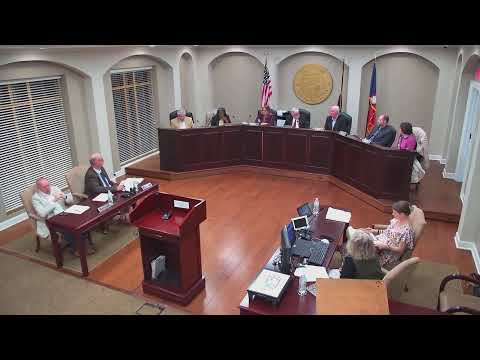
On first reading the Clinton City Council considered an ordinance to amend the city's subdivision regulations governing streets and inspections and voted to advance the measure to a later reading after discussing several clarifying edits.
Under the change recommended by the Planning Commission and presented at the meeting, compaction and material testing for new subdivision streets would be performed by an independent contractor not associated with the developer; the city would select the contractor, while the developer would be responsible for paying the contractor's fees. The ordinance would also require a final engineering report to be submitted to the Public Works Director and the Planning Commission before the Planning Commission could recommend that the council accept the streets into the city's inventory.
City staff said the developer must continue to post a bond (described in the discussion as a bid bond) that would remain in effect for three years so the city could identify and require repairs if construction damaged a street after turnover. Council members raised concerns about clarity on who hires the independent engineer, whether the process could delay subsequent phases of a development, and whether the city should rely solely on the engineer's certification.
"We will bring a contractor or a contractor in to do all the testing for those roads during the construction phases," a staff member explained, adding that the city would propose a contractor and the developer would pay for the service. Council members asked for clearer language to ensure the city, not the developer, is the responsible party for engaging the independent qualified registered engineer even though the developer bears the expense.
The ordinance was taken on first reading and the motion carried; councilors said they would review and clarify the language before the second reading so it would not unintentionally stall later phases of development.
Why it matters: The change is intended to strengthen the independence of street and material testing for new developments so that streets accepted into the city's inventory meet South Carolina Department of Transportation standards and the city has a clearer certification and repair path.