Get Full Government Meeting Transcripts, Videos, & Alerts Forever!
Get email alerts on the Behavioral Health topic
No spam. Unsubscribe anytime.
County health officials highlight 2025 behavioral health activity, propose hosting regional diversion summit
Summary
Spokane County health and behavioral services staff reported 2025 service volumes (tens of thousands of crisis contacts and regional behavioral health services), described declines in some involuntary investigations, and proposed hosting a 2027 regional diversion/deflection summit to share best practices and coordinate services across Eastern Washington.
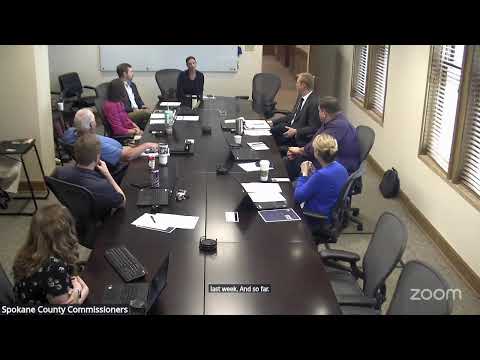
County health and behavioral services leaders briefed Spokane County commissioners on July 7 about their 2025 annual report, regional crisis response activity and proposed regional convening on diversion and deflection strategies.
Presenters said the department and its partners served tens of thousands of people in 2025 across crisis, behavioral health and developmental disability programs. The department reported more than 45,000 individuals served across divisions in 2025, managed roughly $63 million in grant funding across a variety of programs, and oversaw crisis and mobile response activities covering the six‑county region.
Officials said the region recorded more than 31,000 regional crisis line calls and 42,000 mobile crisis encounters in the most recent reporting year. They said mobile crisis and youth mobile services operate 24/7 through contracted providers, and that the increase in mobile crisis responses has coincided with a reduction in some involuntary commitment investigations (the presenters cited a 20% reduction in voluntary treatment act investigations and a 25% reduction in crisis line calls compared with an earlier period).
The department described expansion of diversion, deflection and reentry teams, mobile crisis providers, and a Path diversion and recovery center; staff said these elements create a local continuum of care so "there is no wrong door" when people request help and that services keep many residents from entering higher levels of care.
Officials proposed Spokane County host the 2027 Diversion/Deflection Summit to bring courts, first responders, behavioral health providers and other stakeholders to Eastern Washington. Presenters said the summit typically attracts 300–400 participants and suggested the county could share planning and funding across regional partners.
Commissioners asked for more detail on budget allocations and reserve usage for the mental‑health sales tax; presenters said recent years have relied in part on reserves and that 2027 will be the first year to allocate annualized sales tax receipts after drawing down reserves. Commissioners also sought more detailed quarterly and comparative data on 988/Regional Crisis Line (RCL) calls and mobile crisis outcomes; staff said they would provide that follow‑up.
The briefing closed with commissioners thanking staff; no formal action was taken at the briefing.